I will never forget the sound of that door clicking shut.
It was a cold, rainy night in October of 2009, in our little house on Elm Street in Millbrook, Ohio. My son Ethan stood in the hallway, his eyes red from crying, his seventeen-year-old hands trembling as he told me his girlfriend Claire was expecting a baby.
I didn’t ask how he felt. I didn’t ask what his plans were.
I just stood there, ironing a shirt, and I said, ‘You want to be a man? Fine. Here’s two hundred dollars. Now get out of my house. I will not have that kind of trouble under my roof.’
He stared at me like I had slapped him. ‘Mom, please,’ he whispered. ‘I need you. We don’t know what to do.’
I didn’t even look up from the ironing board. ‘You should have thought about that before.’
Ethan packed a single duffel bag. His footsteps were heavy on the porch. The rain was coming down in sheets. I watched from the window as he walked to the end of the driveway and then just stood there for a full minute, looking back at the house. Then he turned around, pulled his hood up, and disappeared into the night.
That was the last time I saw my son.
For the first few months, I was angry. I told myself he needed to learn responsibility. My husband, Earl, had passed away when Ethan was ten, and I had raised him alone. I thought I was doing the right thing. I thought tough love was the only way.
When folks at church asked about him, I would smile and say, ‘Oh, Ethan’s out in Colorado now. He’s got a good job, doing just fine. We’re so proud.’
The lies came so easily.
But at night, when the house was silent, I would lie awake and ache. I would remember the way his little hand used to fit in mine when he was a toddler. How he’d bring me dandelions from the yard. How he’d cry when he skinned his knee and call for me.
Every birthday, every Christmas, I would put one plate on the table and try not to look at the empty chair.
I never tried to find him. Pride is a terrible, stubborn thing. I told myself if he really wanted to come home, he would have called. I never admitted that maybe he thought I never wanted him back.
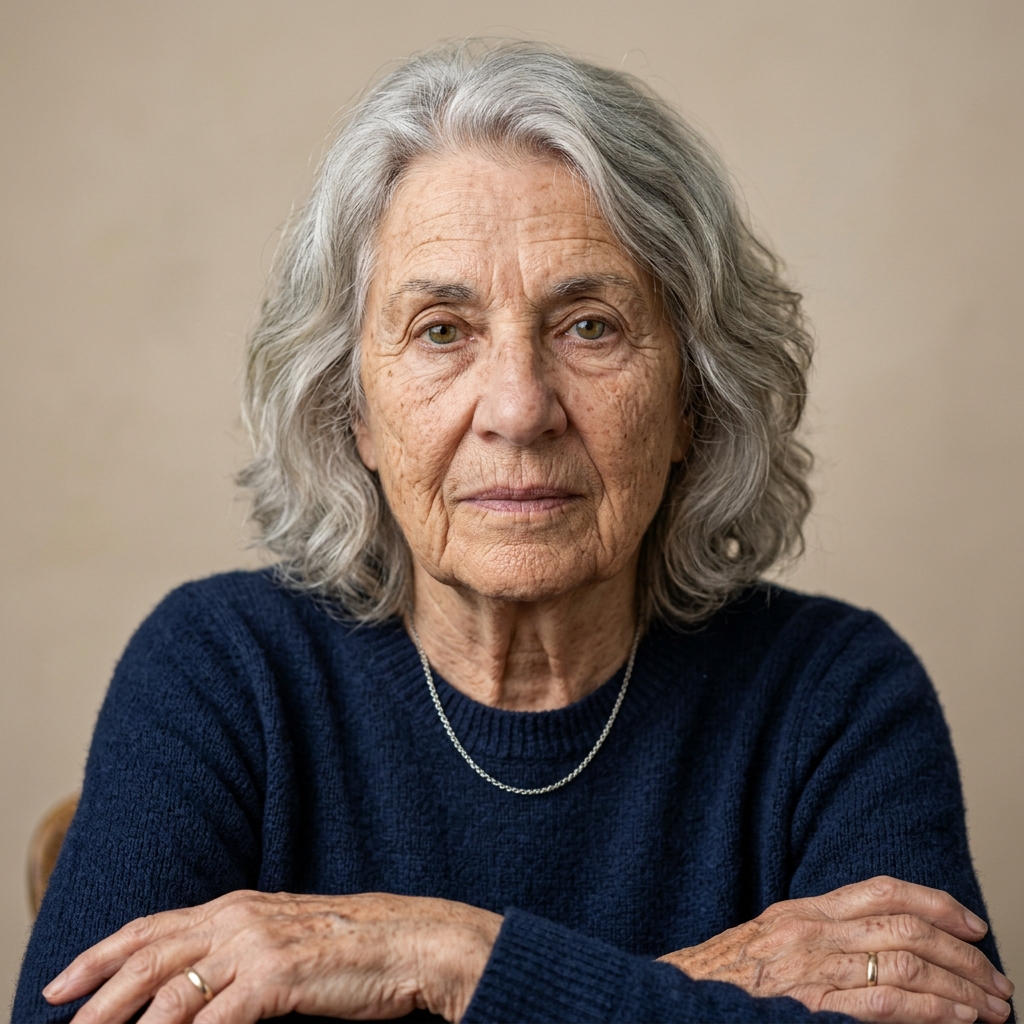
Sixteen years went by. I got older. My hair turned gray. I started volunteering at the Grace Fellowship Food Pantry every Tuesday morning, feeling like a good Christian lady, serving soup to the less fortunate. I would smile down at the homeless men and the worn-down mothers, thinking how wonderful it was to be so generous.
Last Tuesday, we were particularly busy. The line stretched out the door, a sad procession of tired faces and threadbare coats. I was behind the counter, wearing my plastic apron and hairnet, ladling vegetable soup into Styrofoam bowls, feeling that quiet warm glow of self-satisfaction.
The line shuffled forward.
A pair of worn work boots stopped in front of my station. I didn’t look up at first, just saw the shoes and the little bare feet of a child. Then I heard a tiny voice say, ‘Daddy, I’m hungry.’
I lifted my eyes.
There was a man, so thin his cheekbones jutted out sharply. His clothes were clean but faded, a flannel shirt that hung loose on his frame. His hair was unkempt and graying at the temples. He had a little girl, maybe three years old, balanced on his hip. She was wrapped in a coat that was two sizes too big. Clinging to his leg was a boy, no older than five, with big brown eyes and smudges of dirt on his cheeks.
The man was Ethan. My son.
My heart literally stopped. The ladle went still in my hand, hovering over the bowl. I felt the heat drain from my face.
He looked at me.
For a long, terrible moment, there was nothing but the hum of the fluorescent lights and the clatter of the pantry around us. His eyes were the same eyes I had seen cry over a scraped knee. They were full of a profound, bottomless weariness now. And something else. Shame. Deep, heavy shame.
I opened my mouth, but no sound came out.
Ethan shifted the little girl on his hip. He glanced down at his children, then back at me. With a voice so quiet, so careful, so the little ones wouldn’t hear, he said, ‘Mom, I just need…’
He couldn’t finish the sentence. His voice cracked and he looked down at his shoes.
The little boy tugged on his pant leg. ‘Daddy, are we getting soup?’
I stood there frozen, a ladle in my hand, with a line of hungry people behind my son, and I realized with a sickening jolt that I had everything to do with the hunger in those children’s eyes.
I thought of the two hundred dollars I had handed him on that rainy night. I thought of all the nights I had sat in my warm house, full of pride and a bowl of hot soup, telling myself he was doing well. I thought of the sixteen years of prayers I had never truly prayed for him, because I was too proud to admit I had been wrong.
I looked at the thin man who used to be my chubby-cheeked little boy, and I felt the ladle slip from my fingers and clatter into the soup pot.
‘Ethan,’ I finally whispered.
He flinched at the sound of his name.
And then I saw the faces of my grandchildren for the first time. The little girl had his eyes. The little boy had my husband’s chin.
Tears started rolling down my cheeks.
‘Mom,’ Ethan said again, his voice barely audible. ‘I just need some food for the kids. Please. I’ll go. I won’t bother you again.’
And in that moment, surrounded by the smell of soup and the hushed whispers of the people in line, I understood that my tough love had not taught him to be a man. It had taught him that he was alone. That he had nowhere to go. That his own mother would choose her pride over his life.
The realization was like a knife to my heart.
I reached out with a trembling hand, and I touched his sleeve. ‘No, Ethan,’ I said, my voice breaking. ‘You don’t have to go. Please. Come home. Please come home.’
He looked at me, his eyes full of disbelief and a faint, fragile hope.
And then I did what I should have done sixteen years ago. I stepped out from behind the counter, and I wrapped my arms around my son and his children, and I held on like I would never let go.
It was the best bowl of soup I never served.
Pride kept me from my son for sixteen long years. It almost kept me from my grandchildren forever. Sometimes, the hardest thing in the world is to face the mess we have made. But nothing, absolutely nothing, is more important than family.
Maybe you are holding onto a grudge today. Maybe you think your pride is more important than your child. Please, let me tell you from the depths of a mother’s regret: do not wait sixteen years. Reach out. Say you are sorry. Ask them to come home.
The door you closed can be opened again. But only if you humble yourself enough to turn the handle.
What would you have done if you saw your child in that soup line? Have you ever held onto pride too long? I would love to hear your stories in the comments below. If this story touched your heart, please Like our page and Share it with someone who needs to hear this message today. And follow us for more stories that remind us what truly matters.