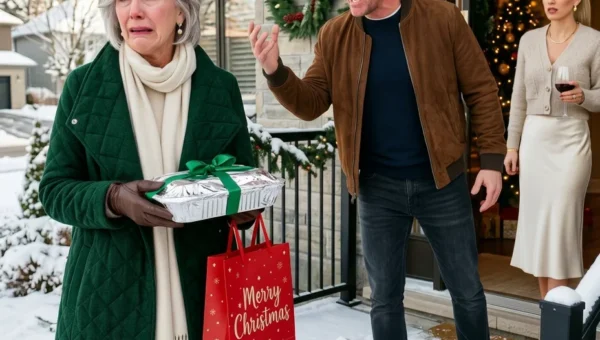

“Your brother needs that $65K more than you need your life,” my dad sneered in our kitchen today. He demanded my med

The scent of cinnamon, melted butter, and baked apples filled the kitchen, a thick, sweet aroma that felt entirely out of place in a house built on quiet resentments. It was my mother’s signature dish—a deep-dish apple pie with a perfectly fluted crust. She hadn’t baked it in years. The last time I tasted it, I was twelve, and she had made it to apologize for missing my middle school graduation. Today, I was twenty-nine, bald from six rounds of aggressive chemotherapy, weighing a fragile eighty-eight pounds, and still, somehow, far too expensive for my family to love.
I sat at the kitchen island, my hands wrapped around a mug of lukewarm chamomile tea, watching my mother, Susan, carefully slice through the golden crust. She plated a generous piece and slid it across the marble counter toward me. Her smile was a terrifyingly perfect replica of maternal warmth.
“Eat up, Clara,” she cooed, her voice dripping with artificial sweetness. “You need your strength. The doctors said you’re looking so much better.”
It was a Judas meal. The ultimate betrayal wrapped in a lattice crust.
I didn’t touch the fork. I just stared at the thick manila envelope resting ominously between my plate and her freshly manicured hands. Inside that envelope was the bank documentation proving I had exactly $65,000 left to my name—the exact sum required for my upcoming life-saving surgery, my post-treatment medication, and six months of rent while my body tried to remember how to live.
My mother kept tapping the corner of the envelope with one glossy red fingernail, staking her claim.
Across the kitchen table, my older brother, Ethan, stared at the hardwood floor. He looked wrecked. His eyes were swollen, the skin beneath them bruised with exhaustion and hangover, yet a gleaming $900 watch still caught the light on his wrist. Gambling had eaten him alive again. But this time, he owed money to men who did not send polite, printed reminders in the mail. They sent messages in broken bones and shattered windows.
“Your brother made a mistake,” Susan said, her voice dropping the maternal cadence, shifting into the cold, practical tone she used when managing a crisis.
I wrapped my hands tighter around my mug, desperate to hide the slight tremor in my fingers. “My oncologist moved the surgery up. I need that money, Mom. It’s not a savings account. It’s my life.”
From the corner of the room, leaning against the doorframe like a warden overseeing a prison yard, my father, Thomas, let out a short, ugly laugh.
“You always need something, Clara,” he muttered, crossing his arms.
I slowly turned my gaze to him. “I have a life-threatening illness. I have a tumor resting against my lung.”
“And Ethan has people coming after him,” Susan snapped, the mask of the caring mother slipping entirely. “You think you’re the only one in danger here?”
Ethan finally raised his head. His eyes didn’t hold guilt; they held the cornered, frantic look of a rat caught in a trap. “I’ll pay you back, Clara. I swear to God.”
“You said that when you stole my credit card two years ago,” I replied, my voice raspy but steady.
His face hardened. The faux-remorse vanished, replaced by the vicious entitlement that my parents had nurtured in him since birth. He reached into his leather jacket, pulled out a glossy photograph, and tossed it onto the kitchen counter. It slid, stopping right next to the apple pie.
I looked down. My breath hitched.
It was a picture of me. I was walking out of the Mercy General oncology clinic, wearing my grey beanie, looking frail and exhausted. I was alone, stepping into a cab. The photo had been taken from across the street.
“They aren’t just sending me texts anymore, Clara,” Ethan hissed, leaning forward. “They know who you are. They know where you get your poison pumped into your veins. They know how weak you are. You give me that money, or they’re going to collect it from you. You think you’re safe? You’re not.”
A cold dread coiled in my gut. He wasn’t just begging for a bailout. He was leveraging my physical vulnerability, using my illness as collateral for his debts. He was throwing me to the wolves to save his own skin.
Thomas stepped out of the shadows and approached the table. He was a large man, built like a linebacker, carrying the weight of a man who believed his authority was absolute. He pulled a pen from his shirt pocket and dropped it on top of the envelope.