He did not answer for a long moment.
Then he said, “She’s just stressed.”
Men in love excuse danger all the time.
Until danger slaps someone they revere.
Then a cousin from Daniel’s side spoke up in the entrance hall.
“She said Uncle Ray couldn’t sit near the front because his suit looked rented.”
An old family friend added, “She told the caterer not to serve Daniel’s high school coach until the ‘real donors’ had eaten.”
Then the makeup artist, of all people, muttered, “She said the groom’s family needed a better background story.”
That was when the room changed.
This was no longer about a moment.
It was about character.
Daniel took off his boutonnière and handed it to the wedding planner.
“The ceremony is canceled.”
Vanessa laughed.
A short, sharp, unbelieving sound.
“You cannot be serious.”
“I am.”
“You’re ending our wedding over her?”
He looked straight at her.
“No. I’m ending it over you.”
That line hit harder than the slap ever could.
Vanessa’s mother rushed over, whispering furiously. Her father began apologizing to people he had not even wronged. The bridesmaids drifted away one by one. People from Vanessa’s side looked at one another with the frightened confusion of guests who had dressed for elegance and found themselves standing inside evidence.
But Vanessa was not finished.
Cruel people rarely leave quietly when they think shame can still be reversed.
She pointed at me and spat, “She manipulated you. I knew there was something weird about her. Old women like this always want control.”
That was when Daniel became very calm.
I had seen him that calm only once before, years earlier, when a supplier tried to cheat one of his employees and Daniel quietly dismantled the man’s entire argument with invoices, dates, and signed delivery records.
Calm men can be dangerous in a moral fight.
“The company shares I own today exist,” Daniel said, “because years ago, when nobody believed in me, Mrs. Brooks signed a private loan agreement with me instead of handing me charity. I repaid every dollar with interest. The paperwork is still in my safe. I built my business legally. She protected my dignity while helping me survive. You couldn’t protect hers for ten minutes.”
That was the legal hammer.
Documented support.
Lawful repayment.
Investor trail.
Business records.
A clean, undeniable history.
Not rumor.
Not emotion.
Facts.
Then came the second hammer.
Daniel’s attorney was already at the wedding because wealthy people tend to keep professionals close when prenuptial agreements are involved. He stepped forward after Daniel called his name.
“Since the ceremony has not taken place,” the attorney said carefully, “the prenuptial agreement is not executed, and all asset-related privileges discussed in contemplation of marriage are void.”
Vanessa stared at him.
“What does that mean?”
It meant everything she thought she was marrying into had just vanished.
The apartment transfer Daniel had planned after the honeymoon was gone.
The access to company events and spouse-related trust distributions was gone.
The family foundation role she had bragged about online was gone.
Her seat at the table disappeared before she ever sat down.
And because she had publicly assaulted a guest, the venue manager stepped in too.
“We’ll need you and your party to leave the premises,” he said. “Security footage has been preserved.”
That sentence hit Vanessa’s parents even harder than the cancellation.
Public assault at an upscale venue is not a private embarrassment.
It becomes a record.
And where there is a record, there can be consequences.
Vanessa lunged toward Daniel then, not violently but desperately, grabbing his sleeve.
“You can’t humiliate me like this!”
He pulled free.
“You humiliated yourself. Everyone just saw it.”
There it was.
The truest thing spoken all day.
Some guests from her side began slipping out. Others stayed. People always stay for justice, even when they pretend they are only waiting for instructions.
Daniel looked at me, then at the crowd, and said something I wish more people said publicly.
“If you are only kind to people who can make you richer, you are not kind. You are strategic.”
A murmur of agreement rolled through the room.
One woman clapped.
Then another.
Suddenly the social spell broke. Not because people became cruel, but because they became honest.
Vanessa began crying for real then. I could tell the difference. Not grief. Not remorse. Exposure. The kind that comes when charm fails, witnesses are many, and consequences are already moving. Her father put a coat around her shoulders. Her mother refused to meet anyone’s eyes. Within ten minutes, Vanessa and her family were escorted out through the side entrance.
Not the front.
The side.
The same woman who cared so much about appearances left a canceled wedding through a staff corridor.
Daniel stood in the middle of the ruined entrance hall, breathing hard, looking like a man who had just watched two futures split apart.
Then he turned to me again.
“I don’t know how to make this right.”
I touched his arm.
“You already did.”
He shook his head.
“No. I should have seen it sooner.”
That is the burden decent people carry after betrayal.
Not just pain.
Guilt.
The guilt of having trusted the wrong face.
I told him the truth.
“Love can blind good people. But character reveals itself under pressure. Now you know.”
He let out a long breath and nodded.
Then Ava, practical as ever, looked toward the ballroom and said, “So… are we going to let all this food go to waste?”
That broke the tension just enough for the room to breathe.
Daniel laughed through tears.
A real laugh this time.
And what happened next is one of the reasons I believe bad days do not get the final word unless we hand it to them.
The ceremony was canceled.
But the gathering was not.
Daniel walked to the center of the entrance area, tapped a champagne glass lightly, and addressed everyone.
“Thank you for coming,” he said. “Today did not become the wedding I planned. But I will not let cruelty be the final memory in this room. If you came here in love and good faith, please stay. Eat. Sit together. Celebrate truth, if not a marriage.”
And they did.
His old coach stayed. His warehouse mentor stayed. Cousins stayed. Neighbors stayed. Former classmates stayed. Even the florist stayed. The quartet, after a confused pause, began playing again, softer this time.
Not grand.
Warm.
Human.
I ended up seated beside Ava and three former students I had not seen in years. One of them, now a pediatrician, held my hand and said, “You helped me too, Mrs. Brooks.”
Another laughed and said, “You once bought me winter boots and never told anyone.”
Teachers do not often hear the full echo of a life while we are still alive.
That day, I did.
And it was louder than the slap.
Daniel asked if I would say grace before dinner.
I almost refused.
Then I looked around the room. At the families that remained. At the faces softened by truth. At the man who had chosen honor over image in the most public moment of his life.
So I stood.
Not as a victim.
Not as a poor teacher.
As myself.
And I said, “May we never become so impressed by status that we forget character. May we be brave enough to stop cruelty when it is expensive to stop it. And may we always remember that a person’s worth is not hanging on their clothes.”
There were tears after that.
Mine included.
Daniel later drove me home himself. He carried my gift bag to the porch like the boy who once carried boxes after school for grocery money. Before he left, he stood under my porch light, tuxedo jacket folded over one arm, face pale with exhaustion.
“I keep thinking about how close I came to tying my life to someone who despised the people who made me.”
I told him, “Then today was not your ruin. It was your rescue.”
He cried again.
So did I.
A month later, Daniel called to tell me that the canceled wedding deposits that could be recovered had been donated to a scholarship fund for first-generation students from our old school district.
He wanted to name it after his mother.
And after me.
I argued, of course.
He ignored me, of course.
The Eleanor Brooks and Lila Mercer Bridge Scholarship launched that fall.
The first year, six students received help.
By year two, it was twelve.
By year three, Daniel expanded it into a mentorship network for students with unstable housing, family loss, or financial hardship. Former students volunteered. Local business owners contributed. My old school hosted the first ceremony in the auditorium where the stage curtains still stuck halfway when pulled too fast.
At the first scholarship dinner, Daniel stood at the podium and told the students, “Talent is not rare. Opportunity is. And sometimes the bridge between the two is one adult who refuses to let you disappear.”
I sat in the front row and cried into a napkin.
Vanessa, I later heard, moved back to her hometown after the video of the entrance incident circulated quietly among families and local business circles that once welcomed her.
Not viral.
Not sensational.
Just enough truth reaching exactly the right people.
Her engagement to Daniel had opened doors.
Her own behavior closed them.
No curses were needed.
Facts did the work.
As for me, I went back to my ordinary life.
Morning coffee.
Library visits.
Church on Sundays.
Volunteer essay grading because old habits never die.
I still wore the pearl earrings. I still drove my old sedan. I still clipped coupons when I remembered. My life did not suddenly become glamorous because a rich man honored me in public.
But I carried one changed thing.
Not bitterness.
Peace.
Because every so often, the world does answer cruelty.
Not with louder cruelty.
With exposure.
With consequences.
With one decent person refusing to protect the wrong woman just because she looked good in white.
I have replayed that day in my mind more times than I care to admit. Sometimes I remember the slap and feel the sting again, not on my cheek, but somewhere deeper. Sometimes I remember the silence before Daniel arrived and wonder how many people would have let me be removed if he had not walked in at that exact moment.
But then I remember what happened afterward.
The kneeling.
The apology.
The truth spoken in a room built for appearances.
The wedding canceled.
The meal shared.
The scholarship born from the wreckage.
And I remember this: humiliation is not the end of a story when truth has witnesses.
If your partner humiliates the person who helped build your life and does it in public without shame, there should be no wedding.
No second walk down the aisle.
No polite excuse.
No “she was stressed.”
Character is clearest when someone believes another person is beneath them.
Vanessa believed I was beneath her.
Daniel remembered I was part of the ground he stood on.
That made all the difference.
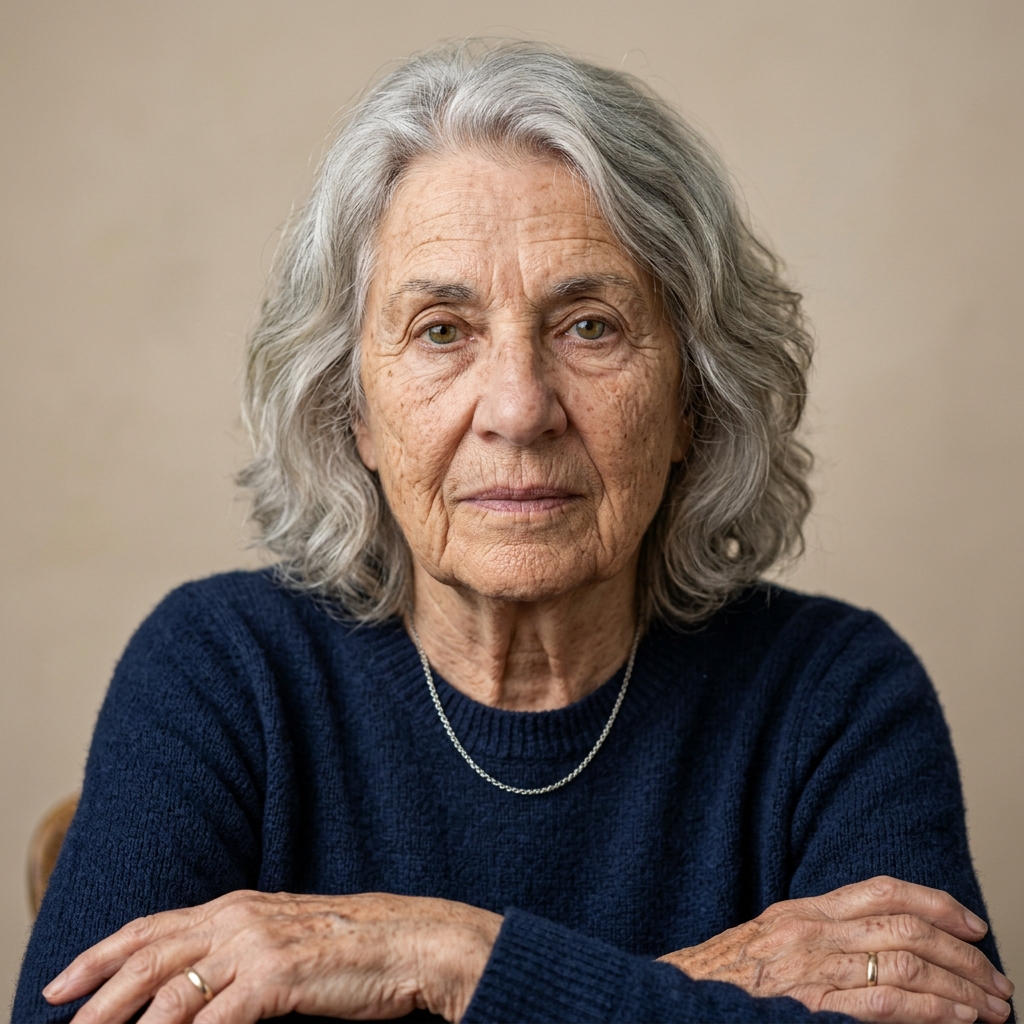
My name is Eleanor Brooks.
I was never poor in the ways that mattered.
I had a classroom full of children who became adults and remembered.
I had a life built on trust.
I had the quiet wealth of having helped people rise.
And on the day a bride slapped me at a wedding welcome table because she thought I was nobody, the man she planned to marry showed everyone exactly who I was.
THE END.
✅ End of story — Part 3 of 3
← Read from Part 1