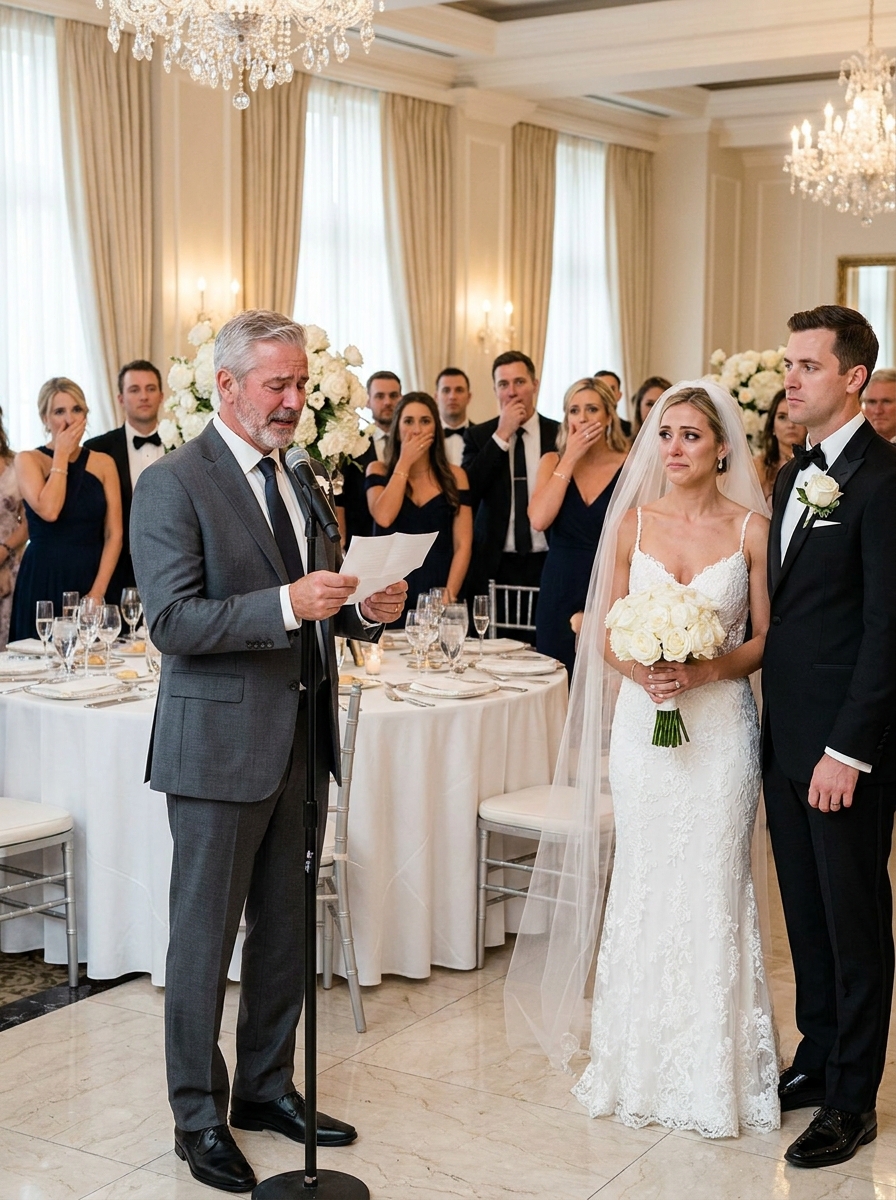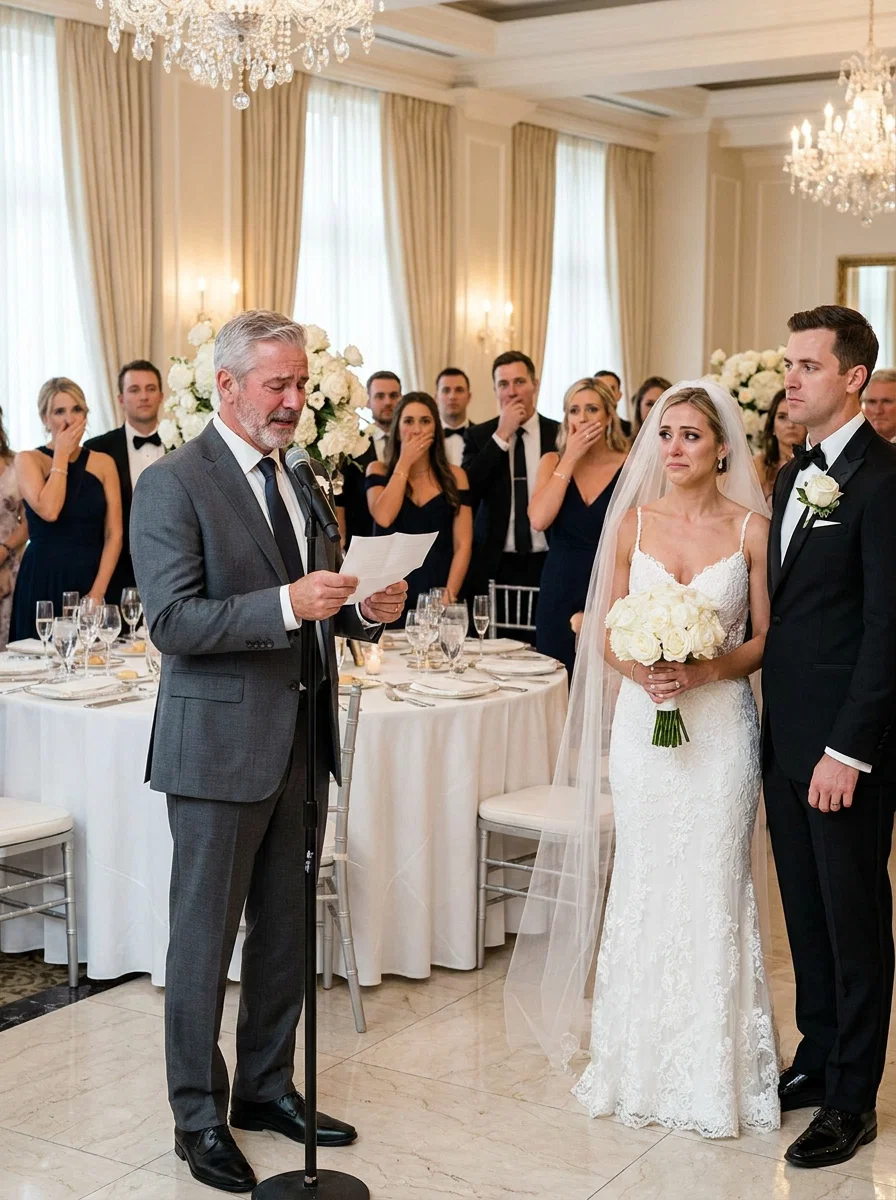
The first thing I noticed about the Azure Heights Estate was that it did not feel like a place where ordinary people were supposed to breathe too loudly.
The ballroom rose two stories above us with its polished stone and towering windows while crystal chandeliers hung from a ceiling painted the soft ivory color of old money. Every surface seemed chosen by someone who had never once looked at a price tag or wondered if tax was included in the final cost.
The light from the bay poured in through the glass in a late afternoon gold haze which softened the white roses on every table and turned the tiny candles into trembling stars. Waiters moved between the guests like shadows in black jackets as they carried trays of champagne so pale it looked almost silver.
The floor was glossy enough to reflect everyone who crossed it and made the whole room feel doubled as if even the guests had more of themselves than necessary. If you walked in without knowing anyone, you might have thought this was exactly what perfection looked like.
I remember thinking that too for maybe half a second before I remembered my father’s suit. There was nothing wrong with it exactly since it was a dark suit that was clean and perfectly respectable.
But I knew the slight shine at the elbows from years of careful wear and I knew the way the left sleeve sat differently because a tailor at a strip mall had shortened it by hand.
It had spent the last week hanging in dry cleaner plastic in my parents’ closet as it waited for this day like a soldier called up for one more formal duty.
My father, Robert Preston, owned exactly one dark suit which he wore for weddings and any event where my mother said he should not wear his brown jacket. Today he had worn it with a white shirt and the navy tie I bought him for Father’s Day three years earlier.
He looked handsome in the way fathers look handsome when you know every tired line around their eyes has a story behind it. However, in that room surrounded by men in tuxedos so tailored they seemed grown onto their bodies, my father’s suit looked like it had been invited by mistake.
My mother knew it too as I watched her smooth one hand over her navy dress for the tenth time since we sat down.
She had spent all morning in front of the bathroom mirror curling her hair into soft waves and pinning a silver clip above her ear before asking me if it looked cheap.
“You look beautiful, Mom,” I had told her that morning while she smiled like she desperately wanted to believe me. Now she looked around at the rose centerpieces and the handwritten place cards while that old hesitation returned to her shoulders.
My mother, Susan Preston, had worked nights at a hospital billing office when Logan and I were kids. She knew how to remove stains from school uniforms with dish soap and she could stretch one rotisserie chicken into soup and sandwiches for a whole week.
She could make a child believe that having pancakes for dinner was a celebration instead of a budget decision. She had the kind of elegance that came from kindness and a lifetime of putting other people first.
But the Azure Heights Estate did not reward that kind of elegance because it only rewarded polish and ease. It rewarded people who knew without being told which fork was for salad and which smile was for someone useful.
We sat together near the back including my mom and my dad and me. I was Maya Preston, twenty eight years old with heels already pinching as I sat beneath chandeliers that probably cost more than my student loans.
At the front of the ballroom, my brother Logan stood near the floral arch in a black tuxedo that fit him perfectly. He looked happy and that was what kept me from resenting the room completely.
Logan was thirty two and usually careful with his expressions because he had spent too many years proving himself to people who doubted him. But that afternoon he was smiling the way he smiled when we were kids and Dad brought home pizza unexpectedly on a Friday night.
He had worked for this life and nobody could say otherwise since he worked two jobs through college including one stocking shelves overnight in Portland. I remembered him coming home with cracked hands and dark circles under his eyes while Mom packed leftovers for him to take back to school.
He earned scholarships and built connections while turning every small opportunity into the next step. Nothing had ever been handed to him and because of that he treated every win like something that had to be honored.
And now he was about to marry Isabella Fontaine at the front of the Azure Heights ballroom. Isabella was beautiful in a way that made photographers relax because every angle of her face looked intentional.
Her dark hair had been swept into a low bun beneath a veil that flowed down her back like water. Her wedding dress shimmered with beadwork so fine it looked like frost had settled over the fabric.
When she moved, people watched her not because she demanded attention but because she had been raised to assume attention would arrive on time. The Fontaines were that kind of family who were rich enough to never be treated like strangers anywhere that mattered.
They were old Boston money with lake houses and private clubs and a way of talking about generosity that made it sound like branding. Isabella’s father, Lawrence Fontaine, wore his tuxedo with the relaxed confidence of a man who had never needed to check if his shoes were scuffed.
Her mother, Madeline, floated through the room in pale champagne silk with blonde hair coiled into a sleek chignon that looked less styled than engineered. They moved from table to table as they accepted congratulations as if the wedding were a public confirmation of their family’s continued relevance.
When they reached our section, I saw the calculation in their eyes which was quick and almost polite. Madeline’s gaze passed over my mother’s dress and paused on my father’s suit before moving on to my simple heels.
Lawrence’s smile stayed in place but the warmth behind it dimmed just enough for me to notice. I had been doing that all day and maybe all year because Isabella had been kind enough to us only technically.
She sent birthday texts with lots of exclamation points and she hugged Mom every Christmas with careful arms that never quite tightened. She once told Logan she loved how grounded he was because he came from such a normal background.
There had always been little moments like the time she called my parents’ house cozy in a tone that made the word sound like a diagnosis. Her mother once asked my mom where she found her dress for an engagement dinner as if Mom had pulled it out of a bin.
Isabella joked that our family Christmas looked so Hallmark and everyone laughed because beautiful rich people often get credit for charm when they are only being careless. I noticed all of it but Logan loved her and you learn to keep certain observations folded quietly inside yourself when someone you love is in love.
You tell yourself that if your brother is happy, you can endure being underestimated for at least one day. When Logan called a week before the wedding and asked us to come to the hotel early, he sounded different.
“I just need you close, okay?” he told me while I was sitting in my kitchen eating cereal over the sink. I asked him if he meant physically or emotionally and he laughed although the laugh came late.
“Physically, just be there early because this whole thing got bigger than I expected,” he said before sighing. He told me that Isabella’s parents make things bigger and he just wanted to look out and see us there.
So we came early because that is what the Prestons did. We showed up for basketball games and late night airport pickups and every version of one another that needed witnesses.
We did not always have extra money but we had presence and we could stand close when it mattered. That was why we were there near the back of a ballroom that seemed designed to remind us what we lacked.
During cocktail hour, the quartet played something light and expensive while guests drifted around with champagne flutes. My mom smiled at people who barely looked at her and my dad kept one hand in his pocket while nodding politely to strangers.
Across the room, Logan laughed with one of his groomsmen and looked relaxed for the first time all afternoon. Then Isabella walked toward us and at first I felt relief because she was the bride and her smile might loosen the knot in my stomach.
“Maya!” she called while her bridesmaids trailed behind her in champagne colored silk. Isabella’s smile shone brightly enough for photographs but as she approached I noticed it did not reach her eyes.
She leaned in while bringing with her the scent of gardenias and money. Then in a voice loud enough for the nearest tables to hear, she said she didn’t realize Logan’s family would be sitting here.
My mother’s smile faltered while Isabella gave a tiny laugh. “A poor family here lowers our wedding’s prestige,” she stated clearly.
For a moment nothing happened as glasses clinked near the bar and someone laughed across the room. My mother’s fingers froze on the edge of a napkin while her face went pale.
My father’s expression did not change immediately as he looked at Isabella and then at my mother. I felt heat surge up my throat because she had called us poor as if poverty were contagious.