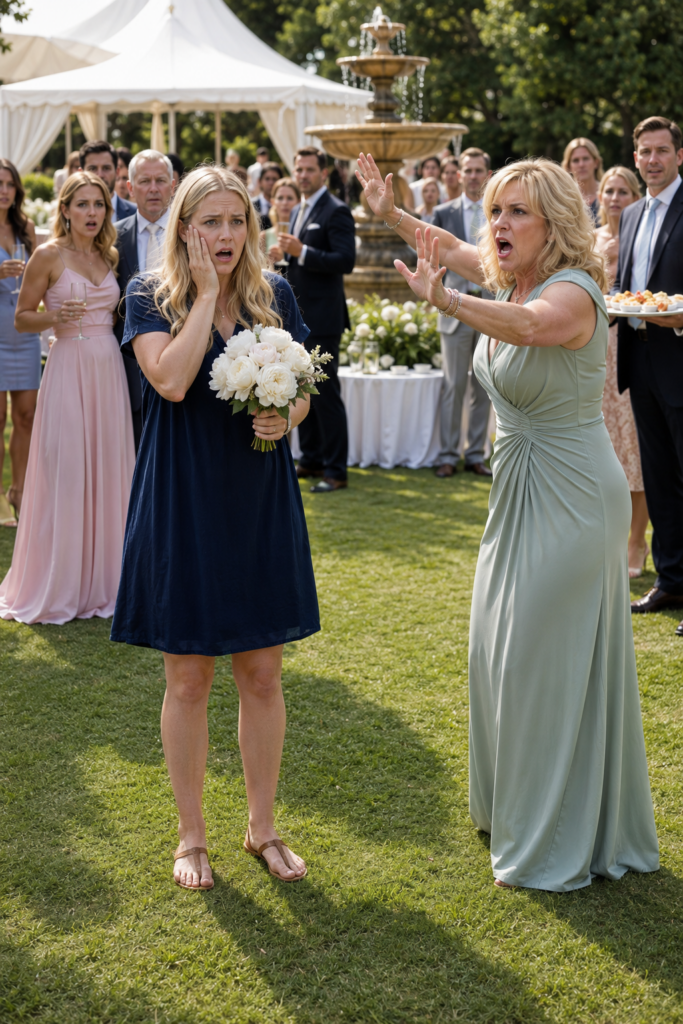
“They’re demanding to see you,” my assistant said. “Something about fiduciary responsibility.”
“Call building security,” I said. “If they’re not gone in five minutes, get the police involved for trespassing.”
They left after ten.
Wednesday, the calls intensified. My mother called from different numbers—friends’ phones, blocked numbers, numbers I didn’t recognize. I ignored all of them. Each ring felt like an echo of the slap, like a demand that I return to my old position: the quiet supporter, the invisible foundation.
On Thursday, she sent a letter by courier to my office.
My assistant brought it in marked urgent. I opened it and found three pages of her handwriting, slanted and looping, becoming more frantic as it went.
She wrote about the mortgage, about the bank rejecting payments, about credit cards being canceled, about the country club threatening to revoke her membership, about the car being repossessed. She wrote that she didn’t understand what happened. She wrote that she was going to lose everything.
At the bottom, in smaller writing, as if squeezed in at the end: I’m sorry about the party. I was stressed. Please help me.
I read the letter twice. Then I folded it and put it in my desk drawer, as if tucking away a piece of an old life I wasn’t sure I wanted to keep.
On Friday, Howard called again.
“Your mother’s house is going into foreclosure,” he said. “The bank filed papers this morning. She has ninety days.”
“That’s standard procedure,” I said.
“Her credit cards have been canceled for non-payment,” he continued. “The country club terminated her membership. Her car was repossessed yesterday.”
I closed my eyes briefly, picturing her standing in a driveway, watching someone hook the car she’d treated like a symbol of worth to a tow truck. I pictured her outrage, her disbelief, the way she would insist it couldn’t be happening because it wasn’t supposed to happen to someone like her.
“Thank you for the update,” I said.
“There’s one more thing,” Howard added, and I could hear a faint note of disbelief. “She started a GoFundMe, claiming she’s a widow facing homelessness due to financial hardship.”
“That’s her choice,” I said.
“It’s raised three hundred dollars in two days,” he said.
I almost smiled. Not because her desperation amused me, but because the people she’d called “important” apparently weren’t rushing to save her.
Two weeks after the party, Aunt Linda called again.
This time, it wasn’t a text. It was a phone call, and the number that flashed on my screen was my mother’s. I answered anyway, because curiosity is a kind of weakness and because some part of me still needed to know.
“Hello?” I said.
“Please,” Aunt Linda’s voice came through, strained. “You need to talk to your mother.”
I leaned back in my chair. “Is she there?” I asked.
“She’s in the bathroom,” Linda said, lowering her voice as if my mother might overhear through walls. “She’s falling apart. The house is in foreclosure. She has no money. She can’t even afford groceries.”
“She can get a job,” I said calmly. “She’s sixty-two. Plenty of people work at sixty-two.”
Linda inhaled sharply. “How can you be so cold?” she asked. “She’s your mother.”
“My mother slapped me in front of sixty people,” I said. “And threw me out of her house because I spoke to a caterer.”
“She said that was a misunderstanding,” Linda said quickly.
“There was no misunderstanding,” I replied. “She was clear.”
Silence. Then Linda said, voice rising with anger now, “So you’re just going to let her lose everything?”
“I’m not making her lose anything,” I said. “She’s losing things because she can’t afford them. That’s called consequences.”
“But you could help,” Linda insisted. “You could fix this.”
“I could,” I agreed. “I’m choosing not to.”
“You’re punishing her,” Linda snapped.
“I’m stopping,” I corrected. “There’s a difference.”
Linda’s voice softened abruptly, like she was trying a different tactic. “Honey,” she said, “I know your mother. She’s… she’s difficult. But she’s also terrified. She doesn’t know how to live without this life.”
“Neither did I,” I said quietly. “I just learned anyway.”
Linda was silent again, and I could hear faint movement on the other end, maybe my mother’s footsteps, maybe Linda pacing. Finally Linda said, “This is cruel,” and hung up.
Three weeks after the party, Howard sent me a report.
It read like a slow-motion unraveling: foreclosure auction scheduled, credit score dropped two hundred points, country club membership terminated, social circle shrinking fast now that there were no more lavish lunches to host. My mother had moved in with Linda temporarily. She had applied for several retail jobs but hadn’t been hired yet.
“She’s also been telling people you cut her off,” Howard noted in an addendum. “Some of her friends have been calling your office.”
“Forward all such calls to our legal team,” I said.
“Already done,” he replied.
A month after the party, another letter arrived. Hand-delivered by courier, marked personal.
Inside was a single page.
I know it was you. Linda helped me figure it out. You were paying for everything for seven years. I didn’t know. I swear I didn’t know. But now I understand. You were taking care of me and I treated you terribly. I’m sorry. I’m so, so sorry. Please forgive me. Please help me. I’m begging you. I’ll lose the house next month. I have nowhere to go. Please.
I read it, feeling my throat tighten in a way I didn’t expect.
Not because the apology moved me. Not because I suddenly believed she saw me. But because she had finally acknowledged reality, and even that acknowledgment still ended in the same demand: save me.
I opened my phone and began typing a response.
You’re right. It was me. I paid your mortgage, your bills, your country club fees, your car lease, your credit cards. For seven years, I funded the lifestyle you thought you were entitled to. You never asked where the money came from. You never questioned the anonymous trust. You just spent it. And while I was paying for your designer dresses and garden parties, you called me an embarrassment. You slapped me in front of your friends. So now you can figure out how to support yourself like the rest of us. Consider this your education in financial independence.
My thumbs hovered. My heart beat hard.
Then, slowly, I deleted it.
Because that message wasn’t for her. It was for the version of me that had waited years to finally say what I felt. Sending it would have been satisfying, yes—but it would also have tied me to her again, like throwing a rope back across a river I’d finally crossed.
So I wrote something simpler. Something colder.
The trust that was supporting you has ended. I have no information about who established it or why it was terminated. I suggest you speak with a financial adviser about living within your means.
I sent that one.
Her response came immediately.
It was you. I know it was you. How can you do this to your own mother?
I stared at the screen until the words blurred, then I blocked her number.
The house sold at auction six weeks after the party.
I heard through Linda that my mother stood across the street in sunglasses and a blouse she’d probably bought at full price years ago, watching strangers walk through the front door that used to be hers. She didn’t cry in public. Linda said she kept repeating, “This can’t be happening,” as if reality had made a mistake.
Then she moved into a small apartment across town. No marble fountain. No lawn big enough for tents. She got a part-time job at a department store, folding clothes for women who looked like her friends used to look—women who still believed the universe would protect them from consequences.
My business didn’t slow down for any of it.
Three months after the party, the startup I’d been building went public. The market valued my shares at seventy million. The headlines called me a visionary. They wrote about my discipline, my calm, my strategic thinking. They didn’t write about how I’d learned discipline in a house where love was conditional and approval was rented.
I bought a larger apartment downtown—light-filled, simple, mine. I donated significantly to charities that supported domestic violence survivors. Not because my mother’s slap was the same as what those women endured, but because the moment her hand hit my face, something inside me understood, in a visceral way, that “family” can be the first place you learn to accept harm.
I established a scholarship fund for women in technology, because I wanted someone else’s daughter to have options I’d had to build from scratch.
Sometimes, when I drove through my mother’s old neighborhood, I passed the house on Riverside Drive.
A young family lived there now. They’d painted the shutters a cheerful color. They’d added a small playground in the backyard where my mother’s party tent used to stand. The sight of it didn’t make me sad the way I’d expected. It made me feel… relieved.
The house had always been a stage. Now it was just a home.
Linda sent occasional updates I never asked for. My mother complained about her job, about her knees hurting after a shift, about customers who didn’t treat her with respect. She still talked about “those people” as if they were a separate species, even though she was now one of them.
“She says you ruined her life,” Linda told me once, voice tired.
“I didn’t ruin anything,” I said. “I stopped maintaining the illusion.”
There were nights when I lay awake wondering if I had gone too far. Not because I missed my mother’s parties or her version of love, but because the child in me still carried that stubborn hope: maybe, if I had done it differently, she would have seen me. Maybe if I had explained. Maybe if I had waited until she calmed down. Maybe if I had given her one more chance.
But then I would remember the slap.
Not just the pain, but the public certainty of it. The way she had felt entitled to strike me because I had, in her mind, threatened her image. The way sixty people had watched and said nothing. The way I had walked out alone.
I did not miss her. I missed the idea of a mother.
One afternoon, months later, Howard asked me, carefully, “Do you regret your decision?”
I thought about it before answering. I thought about the trust, the transfers, the parties, the dresses. I thought about my father, his tired smile, the way he’d always tried to make peace between us. I thought about the bruise that had faded from my cheek but had not faded from memory.
“No,” I said. “I regret enabling her for seven years. I regret not letting her face reality sooner. I regret thinking money could buy me respect, or love, or even basic decency. But I don’t regret stopping.”
Howard nodded slowly. “That’s fair,” he said.
I built my success by recognizing when an investment wasn’t paying returns. My mother was simply the hardest investment to walk away from.
She had taught me, whether she meant to or not, that love can come with conditions. I simply taught her that support does, too.
And we both learned our lessons that spring.
The difference was that I learned mine voluntarily.
—
The first time I saw her again after the auction, it wasn’t dramatic the way people would want it to be if this were a movie. There were no thunderclouds, no slow-motion confrontation in the driveway, no poetic music swelling.
It was a Tuesday.
I was leaving a grocery store with a paper bag cutting into my palm because I’d insisted on carrying it without a cart, as if proving something to myself about how little I needed. The air outside smelled like rain and exhaust, and the pavement still held heat from the day. I was thinking about nothing in particular—whether I had enough basil for the pasta, whether the sourdough would go stale before I finished it—when a voice behind me said my name.
Not loudly. Not with that commanding, stage-ready projection my mother used at parties. Just… my name, quieter, uncertain, as if the syllables might break if she held them too tight.
I froze. My body recognized her before my mind did.
I turned.
She stood near the entrance, half in shadow under the store awning, wearing a department store cardigan that didn’t fit quite right, her hair pulled back in a way that was practical rather than flattering. Her sunglasses were gone. Her face looked thinner. She had that expression people get when they’ve been sleeping badly for weeks—eyes slightly swollen, skin dulled, mouth held in a careful line.
For a second, my brain tried to overlay the version of her I’d seen at the party: sea-glass dress, expensive jewelry, laughter that demanded attention. But the overlap didn’t align. It was like looking at a familiar painting that had been scrubbed with harsh chemicals.
“Mom,” I said, and even saying the word felt strange in my mouth, like using an old nickname you’ve outgrown.
She stepped forward quickly, then stopped as if she’d reached an invisible barrier. Her hands hovered at her sides, unsure what to do.
“I didn’t know you shopped here,” she said, and her voice wobbled slightly at the end.
“It’s close to my apartment,” I replied.
She nodded as if that explained everything. Her eyes flicked to the bag in my hand. “You carry your own groceries,” she said, and it sounded less like an observation and more like a discovery.
I didn’t answer. I didn’t want to talk about groceries. I didn’t want to talk at all, not really.
She swallowed. “I’ve been trying to reach you,” she said. “But my number… and my email… everything. You blocked me.”
“Yes,” I said.
Her face tightened. “You can’t just—” she began, and then her pride caught up with her desperation and yanked the sentence back. She inhaled, forcing herself to recalibrate. “Please,” she said instead.
That single word, coming from her, sounded foreign. My mother didn’t say please the way other people did. She used it as decoration when she wanted to look gracious, not as an admission of need.
“I’m late,” I lied, though I had nowhere to be.
“Just five minutes,” she said quickly. “Just… let me talk to you.”
The part of me that still wanted to understand her—still wanted to crack open her behavior and find something human beneath it—moved before the part of me that wanted to walk away.
“There’s a café across the street,” I said.
Her shoulders sagged with relief, as if I’d granted her oxygen. “Okay,” she whispered. “Okay.”
We crossed together, but not together. She walked a step behind me like she was afraid if she got too close I’d vanish.
Inside the café, the lighting was soft and forgiving, the kind meant to make people linger. A college student typed furiously in the corner. An older couple shared a pastry. It was ordinary. It wasn’t my mother’s world. She looked around like she didn’t quite trust it.
We sat at a small table near the window. I set my grocery bag on the floor and wrapped my hands around a cup of tea I hadn’t planned on ordering. She ordered coffee and didn’t add sugar, which I noticed because she used to insist she couldn’t drink coffee without two packets.
For a moment, she just stared at the tabletop, fingers twisting around the paper sleeve on her cup.
“I don’t know how to do this,” she said finally.
I waited.
She lifted her eyes to mine. “I didn’t know,” she said again, as if repeating it could alter the past. “I swear I didn’t know it was you.”
I felt something flicker inside me—an old, tired irritation. “Do you want credit for not knowing?” I asked.
Her mouth opened, then shut. Her cheeks flushed. “That’s not what I mean,” she said quickly. “I mean… if I’d known, I would have—”
“What?” I cut in. My voice stayed calm, but it had an edge. “What would you have done differently? Would you have thanked me? Would you have treated me with respect? Or would you have just demanded more directly?”
She flinched as if I’d raised my hand.
“I wouldn’t have slapped you,” she said, and the words came out fast, defensive. “I wouldn’t have—”
“But you did,” I said.
Her eyes filled slightly, which surprised me. My mother cried rarely, and when she did it usually served a purpose. This looked messy. Unplanned.
“I was humiliated,” she whispered, and there it was—the center of her universe. Not that she’d hurt me, but that she’d felt small.
“You were humiliated,” I repeated, letting the words hang. “Not me?”
She looked down. “I know I hurt you,” she said, and her voice softened. “I know I did. And I’m sorry. I’m… I’m so sorry.”
The apology should have felt like a turning point. It should have made my chest loosen, should have made the years of tension dissolve into something gentler.
Instead, I felt… nothing. Or maybe I felt too much, so my body protected itself by feeling nothing at all.
I took a slow breath. “Why are you here?” I asked.
Her fingers tightened around her cup. “I need help,” she said.
Of course.
She hurried on, words tumbling. “I’m working, but it’s not enough. I’m part-time right now. They won’t give me full-time hours because—” She shook her head, angry at the injustice of it. “Because they say I’m ‘seasonal.’ I have rent now. Rent. Can you imagine? I have to pay rent every month and it’s due on the first and if I’m late there’s a fee. And groceries are…” She paused, like she couldn’t bring herself to admit how expensive groceries felt when you were counting.
I sipped my tea. It tasted like nothing.
“I’m not asking for everything,” she said quickly, watching my face. “Not like before. Just… something. Until I get back on my feet.”
“You mean until you get back to Riverside Drive,” I said.
She hesitated. “I can’t live like this,” she whispered, and there was a rawness in it that almost sounded like truth.
I leaned back slightly. “You’re living like most people,” I said.
Her eyes flashed. “Most people don’t—” she began, then stopped. She swallowed the rest like poison. “I’m not most people,” she said anyway, softer, as if stating a fact rather than an insult.
I watched her, the way her posture still carried entitlement even as her clothes and circumstances had shifted. The way she still believed her discomfort was exceptional, deserved relief.
“You’re asking me for money,” I said, keeping it simple.
She nodded, almost imperceptibly.
“And what are you offering me?” I asked.
She blinked. “What?”
“I spent seven years giving you financial stability,” I said. “Not just stability—luxury. I did it quietly. I didn’t demand gratitude. I didn’t demand you change. I just… did it. And in return, you called me an embarrassment. You hit me. You threw me out.” My voice didn’t rise, but each sentence landed heavier. “So I’m asking: what are you offering me now?”
Her throat moved as she swallowed. “I’m offering… I’m offering an apology,” she said.
“That’s not enough,” I said.
Her eyes widened, hurt blooming across her face like she couldn’t believe I’d say it out loud. “What do you want?” she demanded, the old tone snapping back into place. “Do you want me to grovel?”
“I want you to understand,” I said, and the calmness of my voice seemed to make her angrier because it refused to play her game. “Not perform remorse. Not say sorry because you’re scared. I want you to understand what you did and why it matters. I want you to understand that you don’t get to hurt people and then demand their help when your life collapses.”
Her jaw trembled. She looked away, eyes darting toward the window as if searching for escape.
“You’re punishing me,” she whispered.
“No,” I said. “I’m not participating.”
She turned back sharply. “You don’t know what it’s like,” she said, voice rising. “To go from… from being respected to being—” Her eyes flicked around the café as if the very air offended her. “To being invisible.”
I almost laughed, but it wasn’t funny. “You’ve been invisible to me for years,” I said quietly.
That landed. I saw it hit something inside her, not exactly remorse, but surprise—like she’d never considered that her daughter might have a whole inner world she didn’t control.
For a moment, she looked older than sixty-two. She looked like someone who’d spent her life building a house of mirrors and now stood among shattered glass.
“I didn’t mean it,” she said, and her voice cracked. “At the party. I didn’t mean… embarrassment. I was angry.”
“You meant it,” I said. “Because you’ve always meant it. You’ve always been ashamed of anything about me that didn’t make you look good.”
Her lips parted, but she didn’t deny it. That was almost worse than denial.
Silence stretched between us, filled only by the hiss of the espresso machine and the soft murmur of strangers’ conversations.
Finally, she whispered, “Your father would be disgusted.”
There it was. The weapon she’d used for years whenever she wanted to win.
My stomach tightened, but my voice stayed steady. “Don’t use him,” I said. “You don’t get to borrow his voice now.”
She flinched, and for a second her eyes looked frightened. Then her face hardened. “So that’s it,” she said, bitterness creeping back. “You’re just going to let me suffer.”
I watched her, and I realized something with strange clarity: she could not imagine a world where my choices were about my boundaries. To her, every action was either loyalty or betrayal. Support or cruelty. She didn’t have a category for self-respect.
“I’m going to let you live,” I said. “The way you refused to live before.”
Her mouth twisted. “You think you’re better than me now,” she said.
“No,” I said softly. “I think I’m free.”
She sat very still, as if the word had slapped her.
I stood. “I hope you learn,” I said, and even that felt too generous, but it was the truth. Not because I wanted her to suffer. Because I wanted her to stop being the kind of person who could only survive by consuming other people.
She rose too, frantic now. “Wait,” she said. “Please. Just—just tell me. Was it really you? All that time?”
I looked at her, the woman who had never asked how my job was, never asked where I lived before she needed an address for her holiday cards, never asked what I wanted beyond what she could show off.
“Yes,” I said simply. “It was me.”
Her breath caught. She looked like she might collapse. Then anger flared in her eyes, hot and immediate.
“How could you do it anonymously?” she hissed. “Why would you hide it? Why wouldn’t you just—just tell me you were helping me?”
Because you would have owned me, I thought. Because you would have treated my money like a leash around my throat.
“I did what I needed to do,” I said aloud.
“And now you’re doing this,” she snapped. “This punishment. This—this humiliation.”
I leaned closer, voice low. “You don’t get to call reality humiliation,” I said. “You humiliated me. Reality is just… real.”
I walked out before she could respond.
In the weeks after that, she tried again. Not directly—she knew I’d blocked her number again after the café—but through Linda, through distant cousins I barely remembered, through old family friends who suddenly discovered a moral opinion about my life.
Messages arrived like mosquitoes: You should forgive her, she’s your mother. One day you’ll regret this. Family is everything. Be the bigger person.
I read them and deleted them.
It was astonishing how many people thought “be the bigger person” meant “accept mistreatment so others don’t have to feel uncomfortable.”
Linda called once more, voice exhausted. “She says she went to the café on purpose,” she said. “She says she waited until you would run into her.”
“She followed me,” I said.
Linda sighed. “She thinks you owe her,” she said, and it wasn’t a defense. It was an explanation. “She’s always thought you owe her.”
“I don’t,” I said.
“I know,” Linda whispered, and there was something in her tone that made my throat tighten. Linda had spent her life orbiting my mother, absorbing the fallout. She’d seen too much. “I just… I want you to know I’m not calling to guilt you,” she said. “I’m calling because she’s… she’s getting worse.”
“Worse how?” I asked, despite myself.
Linda hesitated. “She’s angry all the time,” she said. “She’s bitter. She keeps talking about Riverside Drive like it was stolen from her. She talks about you like you’re… like you’re a villain in a story she tells herself to survive.”
I closed my eyes. The grocery bag had left red indentations on my hand that day; now I could almost feel them again, as if my body remembered even that small weight.