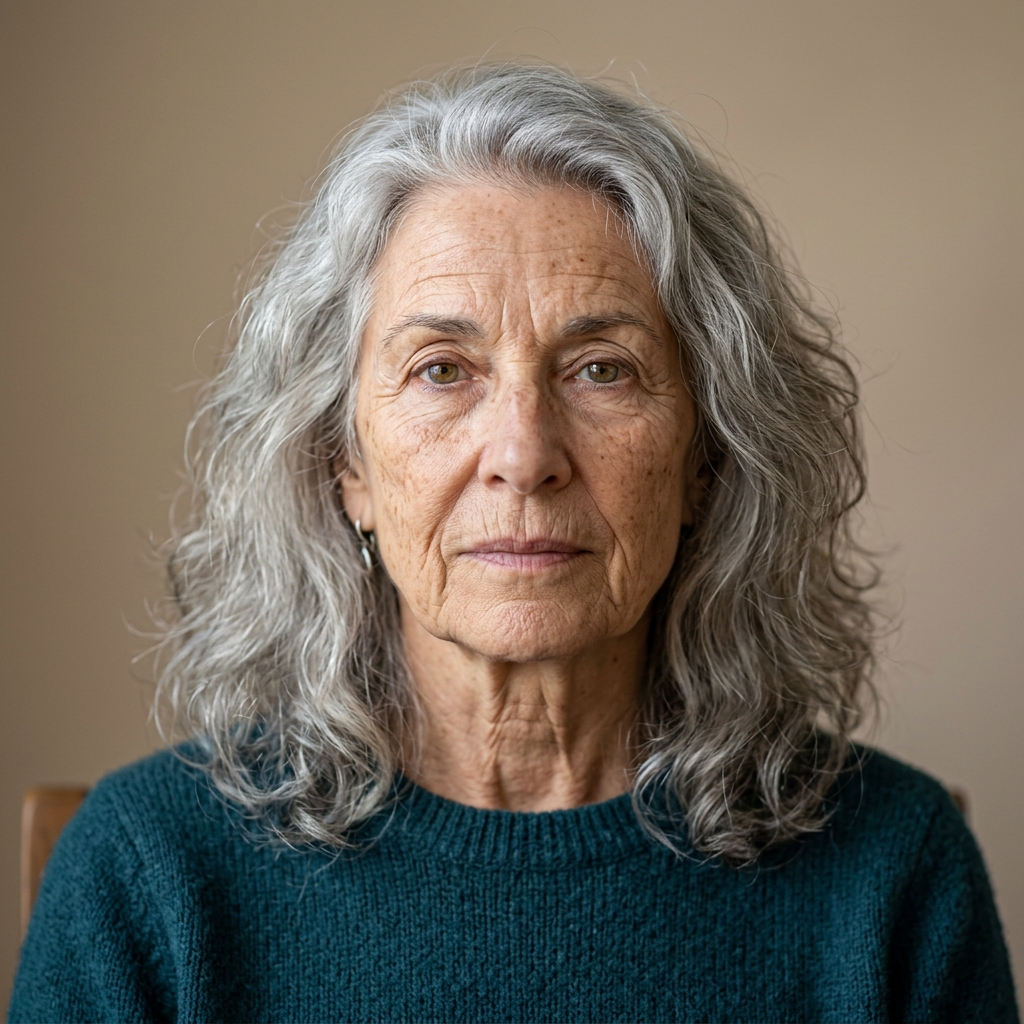
“Take one final photo with me.”
I laughed when Emily said those words, standing barefoot beside me on a beach where the afternoon sunlight turned the ocean gold.
“Final? What are you planning to do, disappear?”
Normally, Emily would have laughed harder than I did. She had always been the dramatic one, the friend who turned ordinary moments into stories we would tell for decades.
But that afternoon, she didn’t smile.
She slowly removed her sunglasses, looked straight into my eyes, and whispered, “Because tomorrow, you’re going to find out who I really am… and why I’ve stayed beside you all these years.”
For the first time in thirty-seven years, I didn’t know what to say to my best friend.
I should have realized then that our lives were about to change forever.
I just didn’t understand how.
The Girl Who Never Left My Side
Emily and I met when we were seven years old.
She had just moved into the little blue house across the street from mine. On her first day at our elementary school, she sat alone during lunch, pushing peas around her plate.
I invited her to sit with me.
By the end of the week, we were inseparable.
We grew up sharing everything: bicycles, birthday cakes, secrets, dreams, and the kind of embarrassing childhood memories that would have ruined our reputations if either of us had ever told anyone else.
When I fell in love for the first time, Emily helped me write a letter to the boy.
When he broke my heart, she sat on my bedroom floor until midnight, eating chocolate and promising that one day I’d laugh about him.
When her parents separated, my family welcomed her into our home. My mother made up the spare bed, my father fixed her broken bicycle, and my younger brother began calling her his second sister.
Our mothers used to laugh that fate had accidentally placed two sisters in different houses.
And when we grew older, our lives continued to intertwine.
We attended the same college, though we studied different subjects. We eventually found jobs in the same office building. We celebrated promotions together, cried over failed relationships, and helped one another through the exhausting responsibilities of adulthood.
When I married Daniel, Emily stood beside me as my maid of honor.
When my marriage ended seven years later, she was the one who helped me pack my husband’s belongings into boxes.
She was also the first person I called when my father died.
For thirty-seven years, I had believed there was no one in the world who knew me better.
I never questioned why.
Until that beach vacation.
The Photograph
We had planned our getaway months earlier.
Emily said she needed a break from work, and I was happy to join her. We rented a small beachfront room, ate seafood at little restaurants, and spent our afternoons walking along the shore.
But over those three days, something about her felt different.
She kept checking her phone, then turning it facedown whenever I approached.
Twice, I caught her watching me with an expression I couldn’t interpret.
On the second evening, I asked if something was wrong.
She shook her head.
“I’m just thinking about how quickly time passes.”
I teased her about becoming sentimental in her old age.
She smiled faintly.
Then, on our last afternoon, she asked for that photograph.
We stood shoulder to shoulder, the wind blowing our hair across our faces. I made a ridiculous expression, and she laughed just enough for the camera to capture something that looked almost normal.
Afterward, she stared at the picture for a long time.
“Promise me something,” she said.
“What?”
“Whatever you learn tomorrow, let me explain before you decide what it means.”
I felt a chill despite the warm breeze.
“Emily, you’re scaring me.”
“I know.”
She slipped the phone into her bag.
“And I’m sorry.”
That night, she told me she was tired and went to her room early.
I barely slept.
At seven the next morning, I knocked on her door.
No answer.
I tried again.
The door opened a few inches. Her room was empty, the bed untouched, and her suitcase was gone.
On the desk sat our photograph.
Beside it was a sealed envelope with my full name written in Emily’s unmistakable handwriting.
There was also a small brass key.
My stomach tightened.
I opened the letter.
Dear Sarah,
If you’re reading this, I’ve finally done what I’ve been too afraid to do for thirty-seven years.
You deserve to know the truth about your family, your father, and the little girl who moved into the blue house across the street.
Before you hate me, please look inside the envelope.
I’m sorry I waited so long.
Emily.
I read the letter three times.
Then I noticed a second envelope tucked underneath it.
Inside was a photograph of two women standing outside a hospital. One was my mother, much younger than I remembered her. The other was a woman I had never seen before.
Between them stood two newborn babies.
On the back, someone had written a date.
The date was my birthday.
I turned the photograph over again, my fingers trembling.
Below the date were four words.
Sarah and Emily. Identical twins.
I dropped the picture.
For several seconds, I couldn’t breathe.
It had to be a joke. A cruel, impossible joke.
Emily and I weren’t twins. We had different birthdays on our official records, different childhood medical histories, and different family photographs.
Our parents had known each other, yes. But no one had ever suggested that Emily and I were related.
I called her.
Her phone was switched off.
I called again.
Nothing.
Then I noticed an address written at the bottom of the letter.
It belonged to an old storage facility on the outskirts of our hometown.
The brass key was labeled with a unit number.
I packed my belongings, checked out of the hotel, and drove straight there.
What My Father Had Hidden
The storage unit contained a single metal filing cabinet, several cardboard boxes, and a dusty suitcase.
Inside the suitcase were documents, old photographs, and a collection of letters tied together with a faded ribbon.
The first document was a hospital birth record.
My mother’s name appeared at the top.
Underneath it were the names of two female infants born minutes apart.
One was Sarah.
The other was Emily.
I sat on the concrete floor, staring at the page until the words blurred.
The letters explained the rest.
My mother had given birth to identical twin girls. At the time, my parents were struggling financially, and my father was terrified that they couldn’t raise two children.
Emily’s mother, Margaret, was my mother’s closest friend. She had suffered several miscarriages and had been told she was unlikely to have a child.
According to the letters, the two women had initially discussed a temporary arrangement. Margaret would care for one baby while my parents got their lives in order.
But my father changed his mind.
He believed the arrangement was the only way to protect both children from a life of poverty. He persuaded my mother to let Margaret raise Emily permanently.
The official records were altered. The families agreed never to tell us.
My mother apparently regretted the decision almost immediately.
One letter, written in her handwriting, stopped me cold.
I see my other daughter in the face of the child I am raising, and every day I wonder whether I have done the unforgivable.
I cannot tell Sarah. I cannot tell Emily. But I cannot keep pretending that this secret will never hurt them.
I searched the suitcase for more.
Then I found a letter addressed to my father, written years later.
You promised me that one day the girls would know. Emily is old enough to understand, and Sarah deserves the truth. How much longer are we going to let them love each other without knowing why?
My father’s response was brief.
They are happy. Telling them now would destroy everything.
My hands went numb.
My father had died six years earlier. My mother had died three years before him.
Neither had told me.
But that wasn’t the worst part.
In the bottom of the suitcase was a second folder marked with Emily’s name.
It contained documents dating from the year my mother died.
The first was a medical report.
The second was a copy of a letter from a lawyer.
The third was a handwritten note from Emily.
I found out the truth when I was twenty-two.
I wanted to tell Sarah immediately. I even drove to her apartment that night. But Margaret begged me to wait until she could explain everything herself.
Then Sarah’s father became ill. Then Sarah got married. Then her marriage fell apart. Then her mother died.
Every time I tried to tell her, another terrible thing happened.
Eventually, I became afraid that the truth would cost me the only person I had ever truly loved.
I had to stop reading.
For thirty-seven years, Emily had been my best friend.
She had known the truth for fifteen of them.
And she had said nothing.
I wanted to be furious.
I was furious.
But beneath the anger was something more painful: the realization that my entire understanding of my own life had been built on a lie.
Then I found a final envelope.
Inside was a recent bank statement, a property deed, and a note written in Emily’s hand.
Sarah, the secret about our birth isn’t the only thing you need to know.
Please read the property deed carefully.
My eyes moved across the document.
It concerned the little blue house where Emily had grown up.
The house had belonged to her adoptive parents, Margaret and Thomas. After Margaret died, Emily inherited it.
But the deed showed that, several months earlier, Emily had transferred ownership of the property to me.
I read the document again.
Why would she give me a house?
Then I found the last letter.
The Secret Behind Thirty-Seven Years
Sarah,
You probably think the worst thing I’ve done is hide the truth about our birth.
You’re right to be angry. I should have told you years ago.
But there is something else.
When your father became ill, he borrowed a substantial amount of money from Margaret. He couldn’t repay it. Before he died, he signed an agreement giving her a financial interest in the blue house.
After Margaret died, I discovered the original agreement. The house was supposed to be sold to settle the debt.
I could have sold it.
Instead, I used my savings to pay off what remained of the loan. Then I transferred the house to you.
I didn’t do it because you owed me anything. I did it because that house was the first place I ever felt loved.
Your parents took me into their home when mine was falling apart. Your mother held me when I cried. Your father taught me to ride a bicycle. And you, Sarah, were the little girl who sat beside me when nobody else would.
I found out we were sisters when I was twenty-two. I stayed because I loved you before I knew why I loved you.
But I also stayed because I was afraid.
I was afraid you’d see me as the girl who had taken your sister’s place. I was afraid you’d blame me for a decision neither of us had made.
And I was afraid that once you knew the truth, our friendship would never feel the same.
Tomorrow, I am going to meet a lawyer and give a formal statement about everything I know. I’ve kept copies of the original records. You deserve the truth, even if it means losing me.
I don’t expect forgiveness.
I only hope that someday you’ll remember the girl who sat beside you at lunch when you were seven.
She loved you then.
She loves you now.
Emily.
I lowered the letter.
For the first time since leaving the hotel, I cried.
Not because I had discovered that my best friend was my twin sister.
Not because our parents had lied.
I cried because Emily had spent fifteen years carrying a secret that should never have been hers to carry alone.
And because I finally understood the expression on her face when she asked for that last photograph.
She wasn’t saying goodbye to our friendship.
She was saying goodbye to the lie that had defined it.
I called her lawyer using the number listed on the documents. He confirmed that Emily had arranged to meet him that morning and had instructed him to provide me with the original records.
He also told me she had left one final instruction.
She wanted me to have the photograph.
The original photograph of us on the beach was still in my bag. I took it out and stared at our faces.
For the first time, I noticed how similar our smiles were.
The same slight tilt of the head.
The same crease beside the left eye.
The same expression my mother had in the hospital photograph.
I drove home with the picture on the passenger seat.
Then I called Emily again.
This time, she answered.
Neither of us spoke for several seconds.
Finally, I whispered, “You should have told me.”
“I know.”
“You let me believe we were just best friends.”
“I know.”
“You let me spend years wondering why you understood me better than anyone else.”
Her voice broke.
“I was afraid you’d never forgive me.”
I closed my eyes.
“I’m not ready to forgive everything,” I admitted. “But I’m not ready to lose you, either.”
She began to cry.
And so did I.
We agreed to meet that evening.
When I arrived at the little blue house, Emily was standing on the porch with two cups of coffee.
For a moment, neither of us moved.
Then she held out one cup.
It was such an ordinary gesture, so familiar that I almost laughed.
Thirty-seven years of friendship, and she was still making coffee the way I liked it.
I stepped forward and hugged her.
She clung to me as if she had been holding her breath for fifteen years.
“I don’t know how to be your sister,” I whispered.
She rested her forehead against mine.
“Then don’t try to be anything different.”
I pulled back to look at her.
“Just be Emily.”
She smiled through her tears.
“And you just be Sarah.”
We stood there for a long time, two women who had grown up believing they were friends and discovered they had been sisters all along.
The truth didn’t erase our childhood.
It didn’t undo the lies our parents had told or the years Emily had spent afraid to speak.
But it gave us a chance to decide what happened next.
And for the first time, that decision belonged to us.
The Twist I Never Saw Coming
Three weeks later, Emily and I met with a specialist who reviewed our birth records and arranged DNA testing.
The results confirmed what the hospital documents had suggested.
We were identical twins.
But the test also revealed something unexpected.
The genetic counselor noticed an inconsistency between my father’s recorded medical history and a family relationship documented in the original hospital file. With our permission, she investigated further.
The finding led us to a sealed letter from my mother, written shortly before her death.
In it, she revealed that my father had not been the one to insist on separating us.
She had made the final decision herself.
She had believed that Emily would have a safer, more stable childhood with Margaret, while I would remain with my parents. My father had opposed the plan at first, but eventually agreed to protect the family from scandal.
The letter ended with a confession that changed everything.
I told myself I was saving both my daughters.
But the truth is, I was afraid of being judged for having two children when I could barely provide for one.
Emily, if you ever read this, please forgive me.
Sarah, if you ever learn the truth, please understand that the worst decision of my life was made out of fear, not a lack of love.
I sat beside Emily as she read those words.
We had spent weeks blaming our father for the secret.
Now we knew that our mother had carried the deepest regret.
Neither of us knew what to say.
Then Emily reached into her bag and took out the photograph from the beach.
“I think we should take another one,” she said softly.
I looked at her.
“Another final photo?”
She shook her head.
“No. A first one.”
We walked into the garden of the little blue house, stood shoulder to shoulder, and smiled at the camera.
This time, there were no secrets between us.
When the picture appeared on the screen, I noticed something tucked behind the frame of the old hospital photograph we’d brought home.
A tiny envelope.
Inside was a note from Margaret, Emily’s adoptive mother, dated decades earlier.
It contained just one sentence:
“I knew you were sisters before either of you did—and I prayed every day that love would bring you together when the truth finally came.”
Emily took my hand.
For thirty-seven years, I had believed she stayed because we were best friends.
Now I understood that she had stayed because, despite every lie told by the adults around us, she had never stopped hoping that one day we would know the truth.
We didn’t get back the years we’d lost.
But we had the rest of our lives.
And this time, we would spend them not as two girls separated by a secret, but as two sisters who had finally found their way home.
Related posts