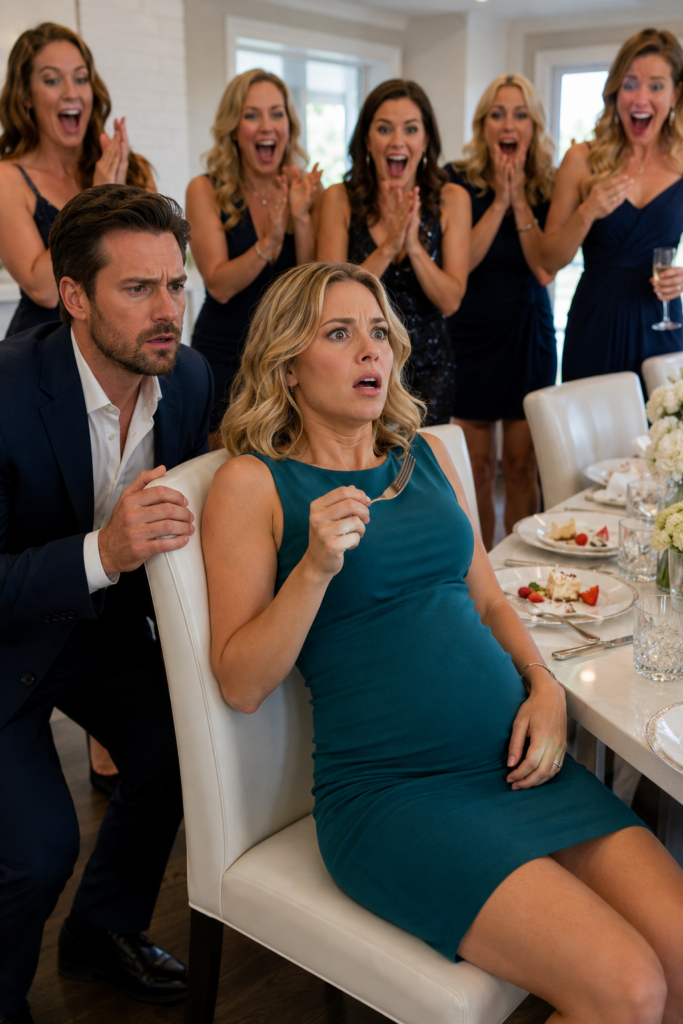
I opened the door only as far as the chain allowed.
“Hey, sis,” Kevin said, his voice too bright. “Why the chain? We’re family.”
I disengaged the chain but kept my hand on the edge of the door. I didn’t step aside.
“What do you want?” I asked. My tone was flat, stripped of the usual softness I reserved for him.
Connie’s eyebrows shot up. “Well, that’s a warm welcome,” she said. “We came to see how you’re doing. You’ve been… distant.”
“I’ve been busy,” I said. “Talking to lawyers. Reorganizing my finances. That kind of thing.”
Kevin’s smile flickered. “You didn’t need to do that without talking to me first, you know. I could have helped.”
“You’ve helped enough,” I said. “About three years’ worth of ‘help,’ according to the bank.”
His eyes hardened. “Now, wait just a second. Those transfers were—”
“Under a power of attorney I revoked,” I cut in. “The same document you convinced me to sign without explaining that one doctor’s note could give you control over my entire life. I’ve read it now, by the way. Every word.”
Connie scoffed. “You agreed to it. Nobody forced you.”
“You’re right,” I said. “I agreed. Because I trusted my brother. Because I assumed he was the same boy who used to call me his second mom, not a man who would scheme to make me look incompetent so he could take my house.”
Kevin’s face drained of color. “What are you talking about?” he demanded. “That’s insane. You’re making wild accusations, Susan. If this is about Connie getting sick at the party—”
“It’s about you talking in your kitchen last weekend,” I said. “About doses and episodes and Adult Protective Services. About needing me to have ‘one bad night’ so a doctor would sign off that I can’t live alone.”
For a moment, the only sound was the distant bark of a neighbor’s dog. Connie’s eyes widened, then narrowed.
“You bugged our house?” she snapped. “That’s illegal. I should call the police on you.”
“My house has a new security camera, yes,” I lied smoothly. “And it picks up more than you think. Enough that if I bring it to an investigator, they’ll have some very interesting questions for you both.”
Kevin recovered some of his swagger. “Nobody’s going to believe you,” he said softly. “You’re a single woman living alone, stressed, clearly paranoid.
I’ve already reached out to get you some help. If Adult Protective Services shows up, it’ll be because I care, Susan. Because I’m worried. That’s what good brothers do.”
I stared at him. For the first time, I saw how his charm would look to strangers—concerned, reasonable, the “responsible” sibling trying to do the right thing. If I hadn’t spent my life watching that charm used like a crowbar, I might have believed him myself.
“You go ahead and tell them whatever story you like,” I said. “I’ll tell them mine. I’ll show them my bank records, the revoked POA, my current cognitive assessment from my doctor, and the recording of you plotting to undermine my capacity. We’ll see which story holds up.”
Connie’s composure cracked. “You ungrateful—” She took a step forward, but Kevin grabbed her arm.
“Let it go,” he muttered. Then, louder to me: “You’re going to regret this, sis. Cutting off family? Airing dirty laundry? People will talk. They’ll say you’re cruel. That you abandoned the brother you raised.”
I thought of Donna, of the way she’d squeezed my hand at the kitchen table. I thought of the coworkers who had cheered when I showed them a photo of my house, the librarian who saved me the good cart of picture books for story hour. I thought of Vicki from Adult Protective Services, whom I hadn’t met yet but could already imagine: tired, perceptive, having seen a hundred versions of this act.
“If people talk,” I said quietly, “they’ll also ask why your own sister wants nothing to do with you. They might start to wonder if there’s a reason. I’m done covering for you, Kevin. I’m done sacrificing my life to keep your reputation shiny. You have taken enough from me.”
His face twisted, a flash of real anger breaking through. For a heartbeat, I saw the boy who’d punched a hole in a wall when I refused to lie to our parents about where he’d been. Then the mask came back, but it didn’t fit as well as before.
“Come on, Con,” he said through clenched teeth. “She’s lost it.”
They turned and walked down the path. Connie glanced back once, her eyes bright with rage and something worryingly close to fear. Kevin didn’t look back at all.
I closed the door and turned the deadbolt with a smooth, deliberate motion.
My hands were shaking, but not badly. My heart was racing, but not out of control. I stood there for a moment, leaning against the door, feeling the solid weight of it at my back.
It wasn’t over. I knew that. People like Kevin didn’t walk away quietly when they lost access to the ATM they thought they were entitled to. He would try other angles. He might charm other relatives into his side of the story. He might even follow through on his threat to call Adult Protective Services.
The thought made my stomach flutter. The idea of some stranger showing up at my door to evaluate my sanity because my brother was angry felt like an invasion. But as quickly as the anxiety rose, another thought followed: I had nothing to hide.
I cooked my own meals. I paid my own bills. I had a lawyer, a banker, and a baby sister who knew the truth. If APS came, they would see me as I was, not as Kevin wanted me to appear.
A few weeks later, they did.
The knock came on a Tuesday afternoon.
I’d taken the day off to help cover a shift at the library later, so I was in jeans and a worn T-shirt, halfway through reorganizing my pantry. When I looked through the peephole, I saw a woman in a dark blazer, a laminated ID badge hanging from a lanyard around her neck. She had a clipboard and a neutral expression.
I opened the door cautiously. “Can I help you?”
“Mrs. Susan Mitchell?” she asked. “My name is Vicki Gomez. I’m with Adult Protective Services for the county. I’d like to talk to you about a report we received regarding your well-being, if that’s all right.”
Some distant part of me noticed that she’d said “report,” singular, not “concerns” or “complaints.” The language matter-of-fact, not accusatory.
“Of course,” I said. “Come in.”
I led her into the kitchen. We sat at the table, the same battlefield where so many of the recent changes in my life had been planned.
Vicki glanced around briefly—not snooping, just taking in the space. My kitchen was clean but lived-in: dish rack half-full, a to-do list on the fridge, a half-eaten apple on the counter.
“I want to reassure you right away,” she said, opening her folder, “that our goal is to ensure your safety and independence, not to take anything away from you. We received a report from a family member expressing concern about potential self-neglect, confusion, and difficulty managing your affairs. My job is simply to assess whether there’s any basis for those concerns.”
I almost snorted. “Let me guess,” I said. “You won’t tell me which family member, but he’s about this tall, talks a mile a minute, and thinks the world owes him a living?”
One corner of her mouth lifted. “I’m not permitted to confirm the identity of the reporter,” she said. “But I can say the person identified himself as your brother.”
I nodded. “Then yes. That’s the one.”
She first asked to see the house.
I gave her the grand tour: the living room, the office, the bathroom, the bedroom. She peeked into my fridge and pantry when I offered, checking for fresh food, not just expired cans. She looked in on my medicine cabinet with my permission, noting that my prescriptions were few and current.
Then we sat back down at the table.
“I’ll ask you a few questions,” she said. “Some of them may seem basic, but they help establish a picture. Is that okay?”
“Fire away,” I said.
She asked about my daily routine. I told her about getting up at six, making coffee, reading the news. About my job at the company I’d been with for nearly two decades, the tasks I handled, the coworkers who couldn’t figure out the new spreadsheet software without me. I told her about my volunteer work at the library, how I read to children on Saturdays and helped older patrons navigate the self-checkout machines.
She asked about finances. I described how I balanced my checkbook, reviewed my statements, and had set up alerts for unusual charges. I told her about the living trust paperwork in progress and the revocation of the POA. I handed her the folder with copies of those documents and the bank printouts.
She asked if I ever forgot to eat, bathe, or take medication. I told her about my weekly meal prep routine, about the grocery lists I wrote carefully to avoid overspending, about my doctor’s praise for my adherence to my blood pressure meds.
She asked about my social connections. I listed Donna, my coworkers, my book club, the librarians, the neighbor who brought me tomatoes from his garden. I didn’t pretend I was surrounded by crowds, but I wasn’t isolated either.
When she finished her questions, she leaned back and studied me quietly for a moment.
“You’re very organized,” she said.
I smiled faintly. “When you’ve been the default adult since you were nineteen, it gets baked in.”
“Tell me about that,” she said. “About your history.”
So I did.
I told her about our parents’ car accident when I was twenty and Kevin was fifteen, Donna only ten. About how I’d quit community college to work full-time because bills waited for no one. About the late nights balancing homework with making sure Kevin didn’t flunk out, about braiding Donna’s hair at six in the morning before my shift. About the way “sister” had blurred into “mother” so gradually I hadn’t even noticed until I was thirty-five and realized I didn’t know what I wanted from life besides making sure they were okay.
“I don’t regret raising them,” I said. “I’d do it again. But I regret not protecting myself more. Not understanding that sacrifice should have boundaries.”
Vicki nodded, jotting something down. “And you believe your brother is now trying to exploit that history.”
I slid a small USB drive across the table. “I don’t just believe it,” I said. “I can prove it.”
She plugged the drive into her tablet, put in earbuds, and watched the recording Donna had captured. While she listened, her expression remained mostly neutral, but I saw a flicker of anger when Kevin’s voice talked about “creating” an episode for me.
When she finished, she removed the earbuds and exhaled slowly.
“This is… significant,” she said. “Financial exploitation of an adult family member, potential poisoning, and an apparent plan to manufacture evidence of incapacity. Combined with what I’ve seen of your current condition, the report of self-neglect appears unfounded. If anything, you’re managing remarkably well in the face of ongoing stress.”
“So you’re not going to cart me off to a facility?” I asked dryly.
“Not today,” she said, smiling briefly. “Or likely ever, based on what I’ve seen. I’ll be closing this case as unsubstantiated. However, with your permission, I’d like to refer the information about your brother’s actions to our financial exploitation unit. They may coordinate with law enforcement if appropriate.”
“Please do,” I said. “At the very least, I want this on record. If he tries this with anyone else someday, I want there to be a trail.”
Vicki gathered my documents back into a neat stack and handed them to me. “You’ve already done more to protect yourself than many people I see,” she said. “Revoking the POA, securing your accounts, consulting an attorney, documenting the conversation. You’re what we hope for in these situations—a person who still has agency and is willing to use it.”
I felt something like pride flicker in my chest. Not for raising kids or surviving on little, but for finally, belatedly, standing up for myself.
“If he contacts you again to threaten or intimidate you, document it,” she continued. “If he shows up at your door and refuses to leave, call the police. You are under no obligation to maintain a relationship that puts you at risk, financially or otherwise.”
“I know,” I said. I realized as I said it that I really did know. The old guilt reflex, the one that said good sisters forgive and forget, was still there, but it didn’t run the show anymore.
Vicki stood and held out a business card. “This has my direct line. If you receive any more ‘reports’ that lead to visits like this, call me. I’ll make sure your file reflects what we’ve discussed today.”
I took the card. “Thank you for coming out yourself,” I said. “I know you must have a lot of cases.”
“I do,” she said. “Too many. But I’ll remember yours. Not because of your brother, but because of you. It’s not often I get to close a case feeling confident someone is truly okay.”
When she left, the house was silent again. I stood at the window and watched her car drive off, then looked down at the card in my hand.
For the first time since the power of attorney fiasco began, I didn’t feel hunted. I felt… buffered. Not invincible, never that, but surrounded by thin but sturdy layers of protection—legal, financial, emotional.
The rest of the year unfolded slowly, the way real life does.
Scott finished setting up my revocable living trust. We transferred the house into it, along with my savings and investments. The terms were clear: I was the trustee while I was able-bodied and of sound mind. If something happened to me, Donna would step in—not Kevin, not any vague “family representative.” Essential costs, like taxes and maintenance, were spelled out. There was no wiggle room for anyone to “interpret” my wishes.
When I told Donna what I’d done, she stared at me across a restaurant table with wide eyes.
“Susan,” she said. “I don’t need your house. I just want you.”
“I know,” I replied. “That’s exactly why you’re the one I trust with it. You see this place as a home, not a prize. That’s the difference.”
Her eyes filled with tears. “I’ll take care of it,” she said. “Not just the bricks. The memories.”
At the same time, Kevin’s life began to unravel, as if someone had pulled the pin out of a carefully balanced structure.
Without my monthly “support,” his budget imploded. I didn’t gloat when I heard about it; the information came sideways, through relatives and, occasionally, through Donna, who still had friends on social media who hadn’t blocked him.
First, there were vague posts about “hard times” and “fake people turning their backs when you need them most.” Then came the rumors of missed mortgage payments, arguments with Connie about money. Eventually, their house went into foreclosure. I saw the listing online once, the place where so much of my stolen money had gone. It was strange, seeing glossy photos of rooms that existed because I had said “Yes, of course” one too many times.
Connie left him about eight months after my confrontation at the door. The story, as it trickled down to me, was dramatic—screaming matches, accusations about “that stupid plan,” blame ping-ponging back and forth until she packed her things and filed for divorce.
Kevin moved into a cramped apartment on the edge of town. I know this not because I followed him or cared to, but because Aunt Linda mentioned it one day in a tone that was half gossip, half disappointment.
“I don’t know what happened to that boy,” she said over Sunday lunch at her place. “He always seemed so charming.”
“He still is,” I said. “That’s part of the problem.”
I saw him once, months later, in the grocery store. I was at the checkout with a cart full of sensible purchases—vegetables, chicken, yogurt—when I heard his laugh behind me. That old familiar burst of sound that used to mean, “Things aren’t as bad as they look.”
I turned and saw him at the express lane, a small basket in hand. He looked tired, older. Some of the swagger was gone. He saw me and froze.
For a second, we just stared at each other across the aisles, the beep of scanners between us.
He opened his mouth like he might say something—a greeting, an apology, a plea. I gave him a small, polite nod, the kind you’d give a distant acquaintance, and turned back to my cart.
He didn’t follow me. He didn’t call my name. When I left the store, his car was still in the lot, parked crookedly as always.
Driving home, I waited for the old guilt to rear up. The voice that would say, You should go to him. He’s still your brother. You can’t just let him fall.
It didn’t come.
Instead, I thought of the office where I’d nearly signed my life away, the plate of cake in my hand, the way he’d watched it like a hawk. I thought of the alternative timeline, the one where I hadn’t swapped plates, where Connie had stood at my sink after the party talking about recipes while I sat in a hospital bed somewhere, disoriented and helpless.
That version of my life didn’t exist because of three things: a gut instinct, a messy manila folder, and a little sister who refused to pretend she hadn’t heard what she’d heard.
Back at home, the house greeted me with the familiar creaks and scents I’d grown to love. I unloaded my groceries, put water on for tea, and stood in front of the kitchen window.
The oak tree in the backyard swayed gently. I’d started painting it in my watercolor class, its branches reaching up and out like a survivor. The instructor said I had a good eye for detail. I told him twenty years of scanning bank statements and report cards had trained me well.
My life wasn’t glamorous. I still worked. I still worried sometimes about retirement, about what would happen if my knees went bad or my eyesight dimmed. I still had mornings when I woke up and felt the weight of all those years of caretaking in my bones.
But now, when I looked around, I saw something I’d never fully allowed myself to see before: I had built this. Not Kevin. Not luck. Me.
I had paid for these walls with nights in cheap shoes and endless cups of breakroom coffee. I had trained myself to understand fine print and balance interest rates. I had learned, slowly and painfully, that love without boundaries isn’t love at all—it’s a slow erasure.
In the evenings, Donna came over sometimes with takeout and stories about her graphic design clients. We’d sit on the couch and watch terrible reality shows, mocking the editing choices. On Saturdays, I stood in front of a half-circle of bright, curious faces at the library and read them stories in funny voices, watching their eyes widen at dragons and spaceships.
Now and then, when the house was quiet and the sun slanted just right across the floor, I thought about my parents. About what they would say if they could see us now.
I liked to imagine my mother would sit at my kitchen table and shake her head with a mixture of pride and exasperation. “You always did take on too much,” she’d say. “But I’m glad you finally realized you don’t have to carry grown men on your back.”
My father would probably stand in the doorway, surveying the place with a practical eye. “You did good, kiddo,” he’d say. “Tighten that hinge on the bathroom door, though.”
As for Kevin, I don’t know what his life will look like in ten years. Maybe he’ll find a job that sticks. Maybe he’ll charm someone else into his orbit. Maybe he’ll sit alone in a small apartment, still telling himself that he’s the victim in all of this.
I’ve stopped trying to predict or fix it.
Because here’s what I know: I am no longer the emergency fund in human form. I am not a retirement plan disguised as a sister. I am a forty-year-old woman who raised two kids when she was barely more than one herself, who kept a roof over three heads, who built a life that someone tried to steal and who stood up and said, “No. Not this. Not me.”
On the night of my housewarming party, when I switched plates without quite knowing why, I didn’t realize I was doing more than saving myself from a bad evening. I was choosing, instinctively, to stay in control of my own story.
And now, as I sit in my warm, quiet house, paint under my fingernails and a stack of library books on the coffee table, I know this much:
My life belongs to me.
I will protect it.
And I will never apologize for that again.
THE END
✅ End of story — Part 3 of 3
← Read from Part 1