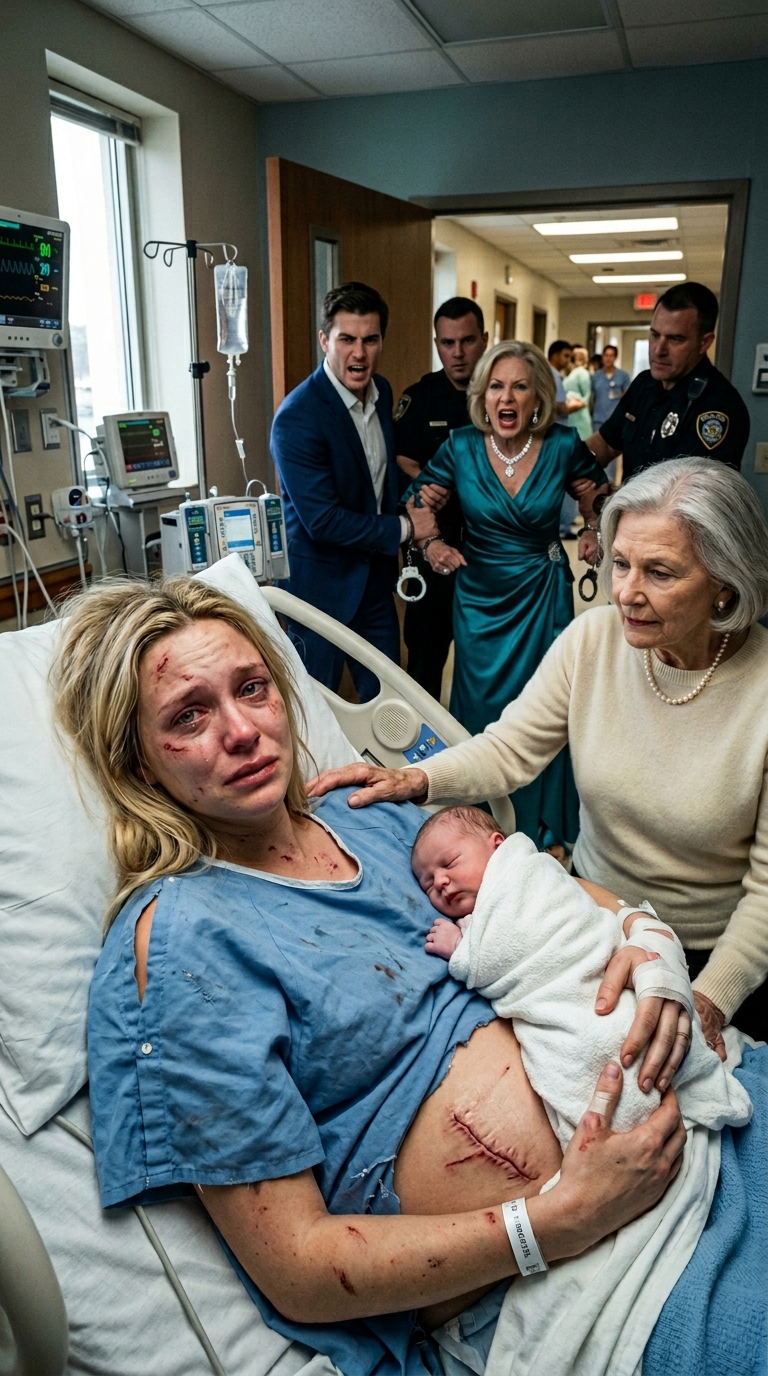
My grandmother’s mouth formed a thin, white line. “Notifications?”
“They went to his phone. He said it was easier because he handled all the auto-pay.”
“Statements?”
“He said they were all digital.”
“Did you ask?”
“Sometimes.”
“And?”
“He would say he had it completely covered.”
I heard exactly how foolish it sounded. I heard the pathetic narrative forming outside my body, the exact story people might tell if they wanted to keep things simple: Wealthy, naive granddaughter too lazy to check her own bank statements.
Handsome husband takes advantage. Powerful grandmother swoops in to rescue her. But betrayal does not feel simple when you are locked inside it. It feels like trying to breathe in a windowless room where someone has slowly, methodically lowered the ceiling one inch every month while convincingly telling you the pressure is just what adulthood feels like.
I wanted to defend myself before she could accuse me. “I know how this sounds,” I said, my voice cracking.
My grandmother leaned forward, her presence engulfing the space. “Do not do that.”
“What?”
“Take responsibility for the architecture of someone else’s deception just because you are embarrassed you lived inside it.”
My eyes burned with hot, humiliating tears. “I should have known.”
“Perhaps,” she said softly. “But he knew you trusted him. That matters.”
It was the very first mercy anyone had given me that entire day. I had not realized how close I was to starving for it.
Forty minutes after my grandmother called Susan, the door swung open.
Liam walked into the room carrying a massive bouquet of expensive flowers. And Patricia Sterling, his mother, walked in right behind him.
Forty minutes after my grandmother made her phone call, the heavy hospital door swung open.
My husband, Liam, walked into the room carrying a massive bouquet of expensive white lilies. His mother, Patricia, followed closely behind him. Liam was handsome in that specific, polished way that makes people forgive too quickly. He wore a fitted navy cashmere sweater over a crisp collared shirt, tailored trousers, and the heavy luxury watch he claimed a grateful client had gifted him. He looked incredibly rested. That detail alone made my stomach turn.
Patricia wore cream, as she always did when she wanted to project an aura of maternal wealth. A camel hair coat hung elegantly over one arm, and she carried a pale blue designer gift bag tied with intricate silver ribbon.
They entered smiling, radiating warmth, fully expecting to walk into a room they controlled.
Then, Liam saw my grandmother.
His perfect smile held for exactly one beat too long. That was the first time I understood my husband’s face as a mechanism—a tool that calculated variables, adjusted, and seamlessly settled into a mask of deep, respectful concern.
“Margaret,” Patricia said, her voice dripping with practiced charm. “What a lovely surprise.”
My grandmother did not glance at her. She locked eyes with Liam.
“Where is my granddaughter’s money?”
No greeting. No soft entry. Liam slowly set the flowers on the windowsill, buying himself two seconds. “I’m sorry,” he said, furrowing his brow. “I’m not entirely sure which funds you’re referring to.”
“Do not insult my intelligence and waste your own time in the exact same sentence,” Margaret replied smoothly.
Liam’s jaw shifted. “Things are vastly more complicated than that. There were massive tax obligations. Timing issues with liquidity. Reinvestment decisions to protect our portfolio. It was all for the household.”
“The household,” I repeated, my voice raspy and thin. “I was counting grocery money, Liam. I worked overnight inventory shifts on concrete floors with swollen feet because I thought we couldn’t breathe financially. I cried over this hospital bill for two hours. And you’re telling me it was for the household?”
Patricia moved forward, her voice dripping with condescending honey. “Clara, sweetheart, you just had a baby. This is absolutely not the time to process complex financial structures with a brain full of raging hormones.”
Margaret slowly turned her head. “If your name appears anywhere on any of that money, Patricia, absolute silence would be the wisest choice currently available to you.”
Patricia froze. The designer bag swung slightly from her wrist, suddenly looking utterly absurd.
Margaret looked back at me. “Clara and the baby are leaving with me tonight.”
“That is absolutely not necessary,” Liam argued, his voice dropping an octave as control slipped from his fingers. He took a step toward the bed. “Clara—”
“Don’t,” I commanded.
He stopped dead. By evening, I left the hospital not with the man who vowed to protect me, but with the woman who actually would. But as I sat awake in my grandmother’s guest room at 4:00 AM, holding my sleeping daughter, the true horror finally washed over me. They hadn’t just taken money. As I would soon discover, they had systematically manufactured my exhaustion, and the paper trail they left behind was worse than any nightmare.
Susan Vance arrived at my grandmother’s estate at exactly 8:15 AM.
She was sixty-two years old, narrow-framed, and possessed eyes that resembled broken glass. She had been my grandmother’s lead attorney for two decades, a terrifying woman who could completely silence a boardroom simply by opening a manila folder. She washed her hands meticulously before touching Chloe’s blanket, told me my baby was exquisite, and then sat down at the massive mahogany dining table.
“Start at the very beginning, Clara,” Susan said, clicking her pen. “And do not attempt to improve it.”
So, I told her everything. I told her about the joint account Liam demanded. The suddenly changed passwords. The rerouted notifications to his phone. The declined credit cards at the grocery store. I described the grueling overnight shifts I took at a pharmacy warehouse at thirty-six weeks pregnant, desperate to pay the electric bill.
Margaret sat at the head of the table, her face carved from granite. Susan interrupted only to ruthlessly pin down the structure of the abuse, asking rapid-fire questions about access, logins, and lifestyle changes. When I finally finished, Susan opened the incredibly thick folder she had brought with her.
“I pulled the emergency asset preservation requests last night,” Susan said, sliding the first crisp sheet of paper toward me.
It showed thirty incoming transfers from Harrington Family Holdings. All exactly three hundred thousand dollars. All routed directly to an account labeled Sterling Household Operating.
“Within forty-eight to seventy-two hours of each incoming transfer,” Susan continued, tapping the paper, “massive amounts were moved out. First to Liam’s personal offshore brokerage account. Then to an opaque entity called Sterling Strategic Advisory LLC. Liam is the sole controller.”
I stared at the numbers. Three hundred thousand in. Two hundred sixty-five thousand out. Over and over. A multi-million-dollar theft operating on a meticulous calendar.
Susan turned another page. “There is also a secondary benefit stream. Patricia Sterling was listed as an authorized user on a premium black card paid directly from the brokerage side. Five-star hotels, luxury spas, high-end retail, and a recurring monthly ‘consulting retainer’ paid to a shell entity.”
My blood ran cold. I thought of Patricia sipping my coffee, telling me that “idle women overthink,” while wearing diamonds bought with money meant to feed my child.
“Then there is this,” Susan said, pulling out a printed transcript recovered from a smart speaker in Patricia’s kitchen.
I read the highlighted lines. Patricia: She still thinks tight means temporary. Liam: She trusts the process as long as I say it calmly. Liam: That is exactly why we keep her tired. Not panicked. Just tired.
The pain in my chest turned to absolute zero. They had engineered my reality with the sociopathic precision of forensic accountants. They knew exactly how physically exhausted I needed to be to stop asking questions.
Susan looked at me. “Liam signed an eleven-million-dollar term sheet with a massive private capital group two weeks ago. If we file this lawsuit now, it will detonate a nuclear bomb inside his professional life. He will lose everything. Do we proceed?”
I looked at the transcript one last time, my grief hardening into unbreakable steel.
“Send it,” I whispered.
My voice did not shake. Susan nodded sharply, gathering her papers.
My grandmother read the draft notice before it went out to the courts and the banks. She took a heavy gold pen and crossed out one specific sentence. The sentence read: These unfortunate circumstances require immediate clarification before closing.
Margaret drew a thick, clean line through the word unfortunate.
“Nothing about this was unfortunate,” she stated coldly. “It was engineered.”
Susan removed the word.
The first panicked call from Liam came just before dinner. I watched his name vibrate on my phone screen while Chloe slept peacefully in the crook of my arm. Then another call. Then a rambling voicemail.
Clara, please pick up. Your grandmother doesn’t understand how these complex structures work. This is being wildly distorted by her lawyers. I was protecting our capital. I was trying to build a legacy for us.
Texts flooded in next.
You are highly emotional and exhausted from the birth.
You are letting Margaret weaponize a totally normal marriage.
Think about Chloe’s future.
We can fix this privately.
Privately. That word made a dark, bitter smile touch my lips for the first time all day. Privacy had always been Liam’s favorite hiding place.
I did not answer.
Within three days, the private capital group paused the second close of his massive deal. Within five days, they formally requested heavily expanded financial disclosures. Within a week, Liam was calling me frantically from unfamiliar burner numbers. I blocked every single one.
The temporary preservation order came through fast enough to completely freeze his accounts before he could move the offshore funds. Susan’s legal team worked like elite surgeons. Forensic accountants ruthlessly traced the flows. Brutal subpoenas went out to every bank. Institutions became suddenly and incredibly cooperative once the words fraud, newborn, and household support appeared in the same aggressive filings. Margaret’s home office resembled a military war room: massive printers running constantly, junior attorneys moving in and out, Susan marking thousands of documents with colored tabs, and my grandmother sitting at the end of the table, bottle-feeding Chloe with one hand while reviewing damning bank records with the other.
Liam did panic. But not publicly.
Publicly, he attempted to play the victim. His high-priced defense attorneys sent flowery letters about “marital misunderstandings,” “complex household tax structures,” and my “severe postpartum vulnerability.” They suggested mediation. They suggested that litigation would permanently traumatize Chloe. They suggested I lacked the mental capacity to understand what was happening so soon after childbirth.
That last suggestion made Susan smile. It was a terrifying smile.
“I was sincerely hoping they’d be stupid enough to put that in writing,” she purred.
Then, Liam made the catastrophic mistake that permanently ended the life he still arrogantly thought he could salvage. A week and a half after we filed, he attended an elite charity finance dinner in Manhattan.
He should have stayed home. He should have kept his mouth shut. But Liam’s ultimate survival strategy had always been total narrative control. So, he talked.
He told powerful people over cocktails that I was suffering from a severe, clinical postpartum psychotic episode. He said my overbearing grandmother had manipulated me while I was medically vulnerable. He said I had kidnapped his daughter and spiraled into manic paranoia over ordinary financial planning. He painted himself as the tragic, long-suffering husband trying to protect his capital and his family from my emotional volatility.
He picked the wrong room.
A prominent woman from the hospital foundation board was there. So was a managing partner from a firm that had once considered co-investing with him. So was a wealthy widower who had played tennis with my grandfather for thirty years and still sent my grandmother handwritten notes every Christmas.
By 9:00 AM the next morning, every single word he spoke had reached Susan. By noon, a massive defamation suit was added to our complaint. By 3:00 PM, amended, highly detailed filings were sent directly to the parties who were already reviewing whether Liam Sterling could be trusted as a steward of millions of dollars.
That was the real, spectacular collapse. Not the marital one. The collapse that mattered to Liam was purely professional.
The eleven-million-dollar term sheet died immediately. Then the exclusive gala invitations stopped. Then the receptionist who had always eagerly answered his calls began forwarding him straight to voicemail because the partners were “in meetings.” A senior associate abruptly left his firm. A massive family office withdrew entirely from co-investment discussions. Men who once laughed too loudly at Liam’s jokes began speaking about him in the cautious, radioactive past tense. Reputation in high finance is not about morality; it is strictly about risk management. Liam had become an unacceptable risk.
On a freezing Thursday morning, Patricia arrived at my grandmother’s wrought-iron security gate. She wore her signature cream coat, oversized dark sunglasses, and a look of sorrow arranged so meticulously it might have been applied with a makeup brush.
My grandmother watched her on the security monitors and refused to open the gate.
Arthur, the house manager, told us she was buzzing incessantly. My grandmother stood up from the library sofa. I did too.
“No,” Margaret said firmly. “You stay here.”
“I want to hear,” I insisted.
She looked at me, assessing my strength. “Then listen from the hall.”
The heavy front door opened. The freezing air slipped inside. Patricia’s voice floated in, trembling just perfectly enough.
“Margaret, please. This witch hunt has gone too far.”
My grandmother said absolutely nothing.
“We are family now,” Patricia pleaded. “There has clearly been a massive misunderstanding. Clara is just exhausted. Liam is totally devastated. We all want what is best for the baby.”
“If that were even remotely true,” my grandmother said, her voice like cracking ice, “you would have left her mother enough money to buy groceries.”
Silence. Then Patricia’s voice sharpened, the velvet stripping away to reveal the razor wire underneath. “You have no idea what Liam was building for them.”
“I know exactly what he was stealing.”