
She Was Thrown Out Of Her Malibu Home. Then The Deed Came Out-olive

Eleanor Vance did not purchase the Malibu beach house simply because she had money.
She bought it because her grief needed a place to settle.
At fifty, newly widowed and worn down from sewing dresses for other women in Chicago, she stood on an overgrown lot above the Pacific and saw what everyone else had missed.
A future.
Her husband had died before they ever became the retired couple they used to laugh about becoming.
Robert was twenty-five at the time, old enough to be building his own life, but still young enough to phone her when the check engine light came on.
Eleanor owned nothing grand in those days.
She had a sewing machine, a strict habit of saving, a back that hurt by nightfall, and a stubborn unwillingness to let widowhood push her into a corner.
The house took years to become real.
Every tile meant something because she had paid for it stitch by stitch.
Every plant meant something because she had carried it home with her own hands.
Each weekend in Malibu became another quiet piece of evidence that she had survived the thing that should have destroyed her.
Robert had understood that once.
He called the house “Mom’s miracle” the first summer the porch was completed.
He helped her carry two wicker chairs out to the terrace and promised he would never forget how much effort had been poured into the place.
When Jessica entered his life, Eleanor tried to welcome her with an open heart.
She invited her there for birthdays.
She made dinners.
She showed her where the spare towels were stored and which cupboard held the good plates.
In time, Robert had the spare key because he was her son, and Jessica had learned enough about the house to locate whatever she wanted.
Entitlement almost never storms into a home at the beginning. It slips in through a door you once opened because of love.
That Friday morning, Eleanor drove the familiar coastal road expecting quiet.
The air carried the scent of salt and eucalyptus.
The sky was clear and brilliant, almost painfully so, the kind of California morning that made the ocean look polished.
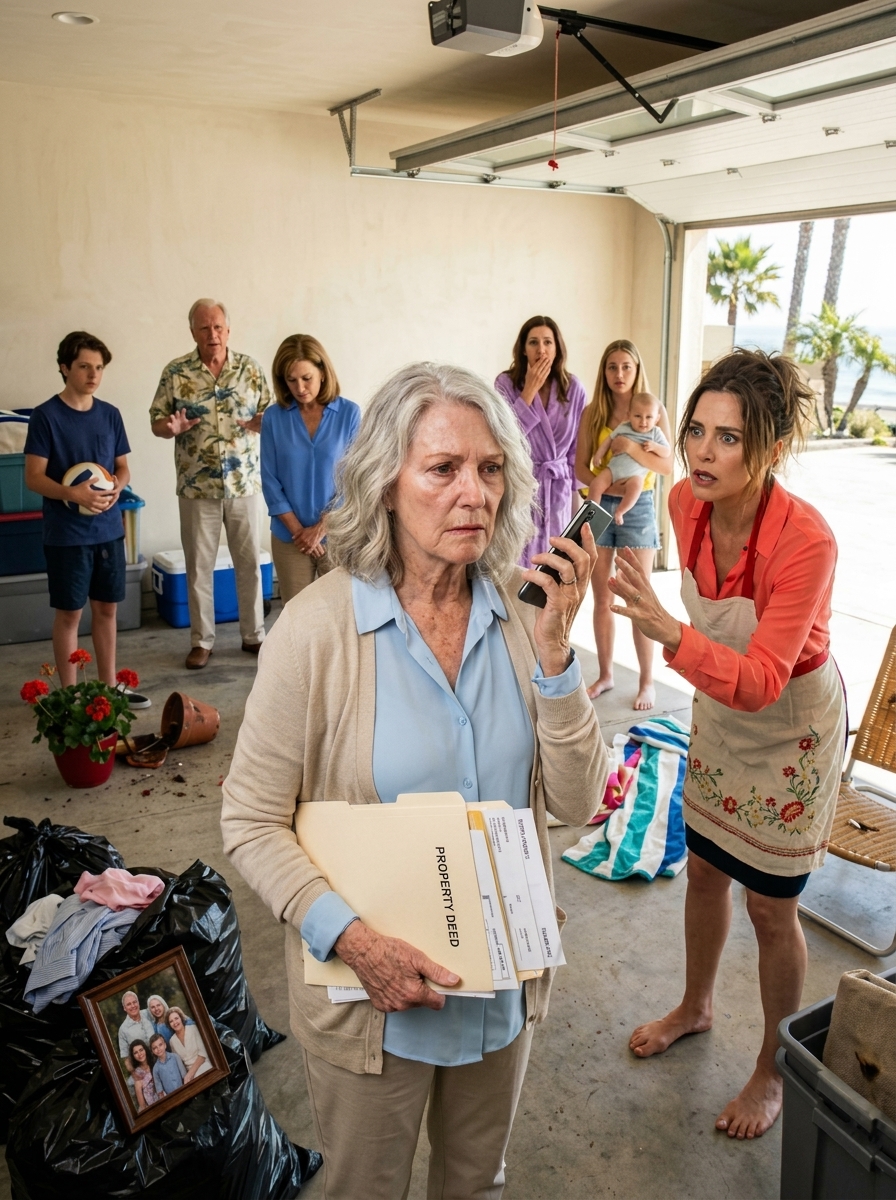
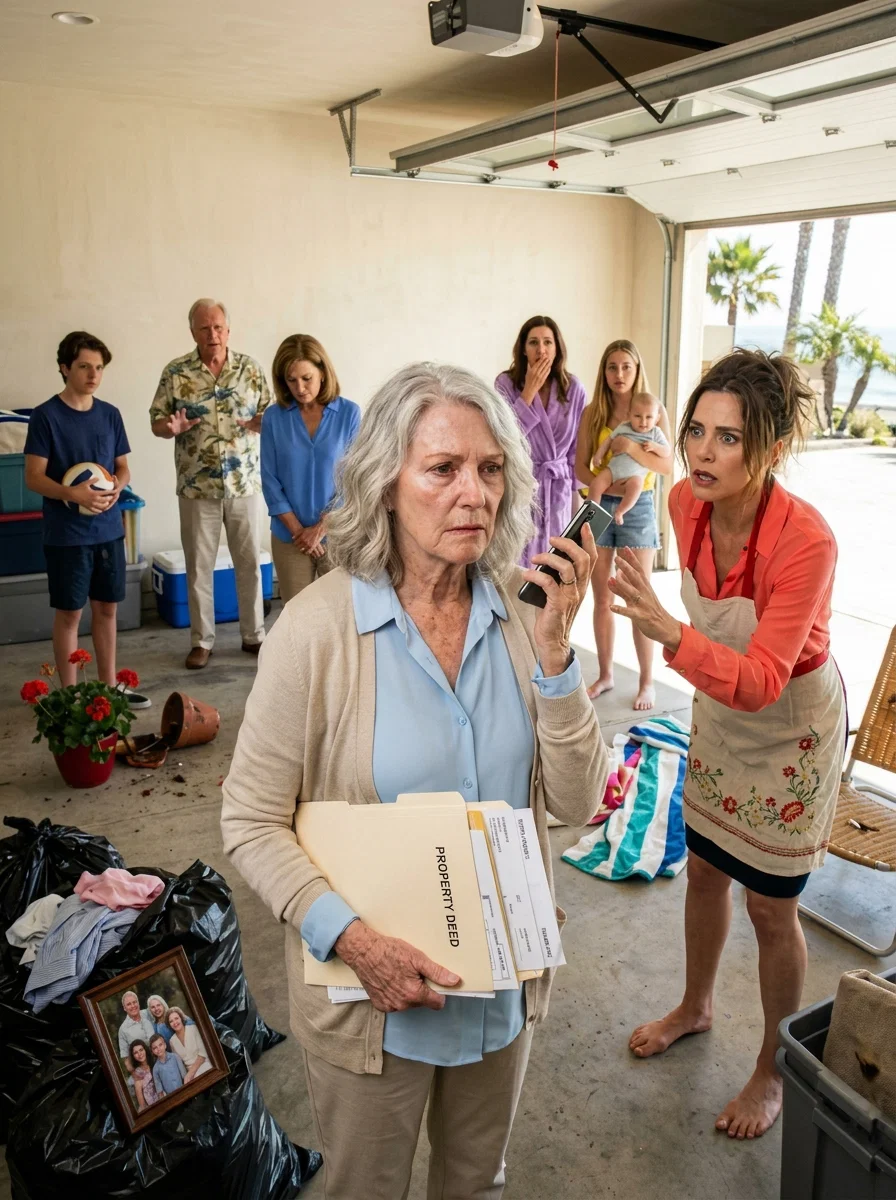
Then she pulled into her driveway and saw unfamiliar cars packed into her garage.
Music pounded from inside the house.
Beer cans lay scattered across the lawn.
The red geraniums she had carefully trimmed by hand had been knocked over, soil spilled across the terrace like something thrown in anger.
Children were running across the patio with a ball.
Wet towels had been draped over her wicker chairs.
Someone had turned the porch into an ashtray.
Eleanor sat in her car for several seconds, keys clenched in her hand, waiting for her mind to reshape the scene into something less cruel.
It did not.
When she got out, the sound of the ocean seemed distant beneath the music.
Jessica appeared in the doorway wearing Eleanor’s embroidered apron.
That particular detail wounded her more deeply than the cars.
Eleanor had made the apron herself ten years earlier, stitching it during the winter after Robert moved into his first apartment.
It was not valuable.
It was personal.
Jessica was wearing it as if it were a costume.
“Jessica,” Eleanor said, “I didn’t know you were here.”
Jessica looked at her the way someone looks at an inconvenience standing in the way.
“What is this old parasite doing here?” she said. “There’s no place for you.”
The terrace went still.
Veronica, Jessica’s sister, froze with a drink in her hand.
Two teenage boys stood beside the destroyed geraniums and stared.
Jessica’s mother gave Eleanor a look of disdain so casual it almost seemed practiced.
A man in a Hawaiian shirt kept one hand resting on a cooler.
A young woman adjusted a baby against her hip.
No one said, “This is her house.”
No one said, “Jessica, stop.”
Nobody stepped forward.
Eleanor felt the teeth of her key press into her palm.
For one second, she pictured herself walking up, ripping the apron from Jessica’s body, and commanding every single person to leave before the next wave struck the rocks.
Instead, she breathed in through her nose.
Cold anger is much quieter than people imagine.
It begins by taking inventory.
“This is my house,” Eleanor said.
Jessica laughed.
She claimed Robert had said they could use it whenever they liked.
She said they were putting the house to good use.
She said Eleanor only ever came around to complain and ruin family plans.
Then Jessica’s mother remarked that Eleanor seemed rather common.
The snickering came quietly.
Quiet cruelty can cut deeper than yelling because it expects you to help make yourself smaller.
Eleanor looked from one face to another and realized the room had already chosen its side before she ever arrived.
She asked where Robert was.
Jessica said he was working, as usual, unlike people who had no real responsibilities.
Then she said the words that destroyed any remaining possibility that this had been a misunderstanding.