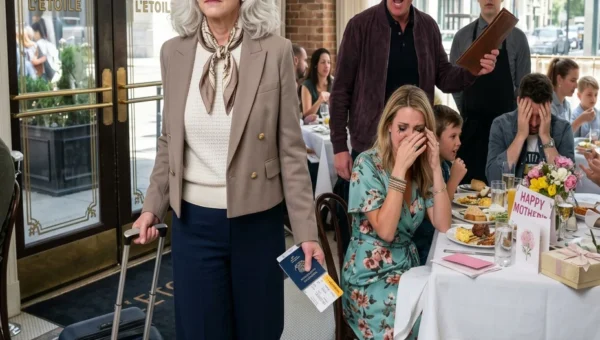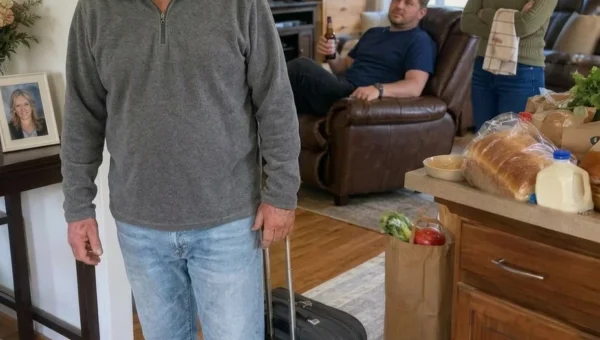
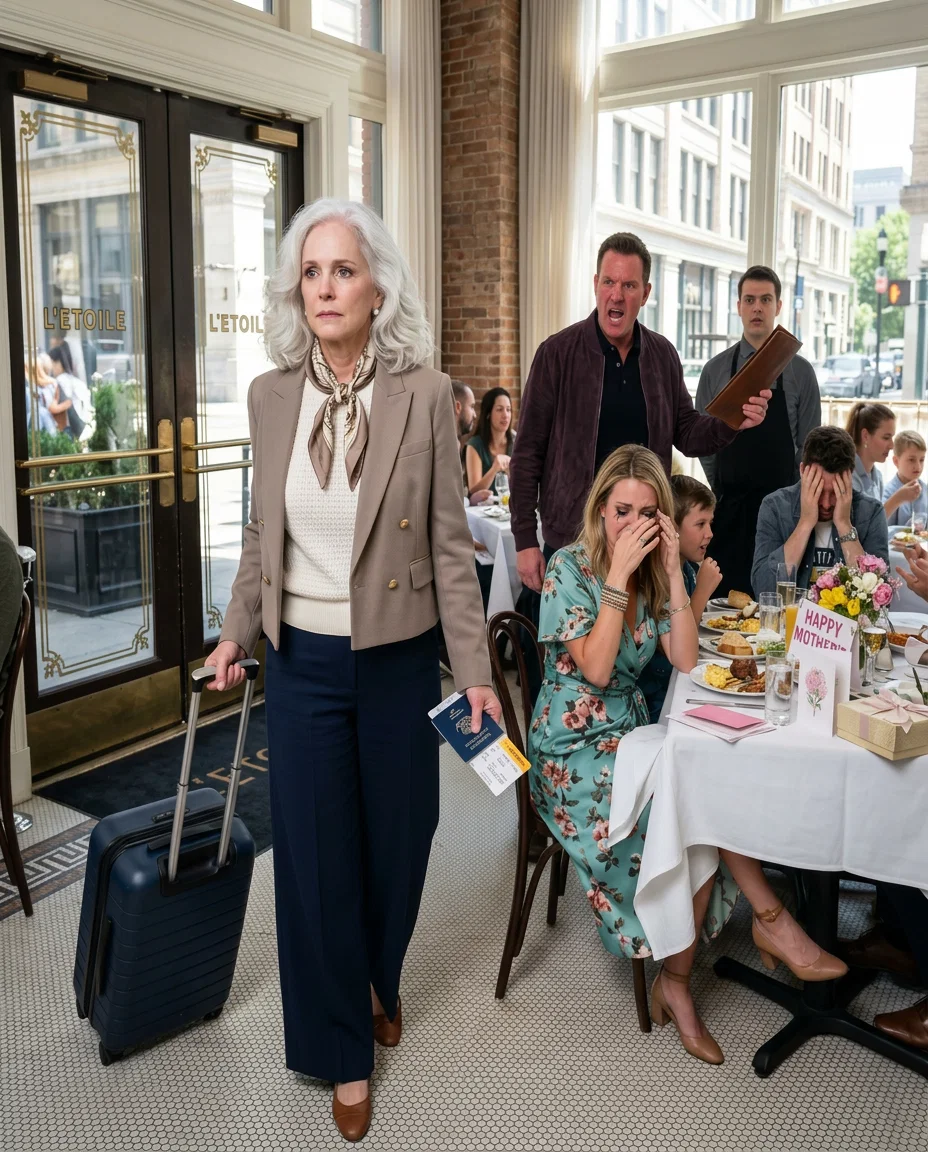
On Mother’s Day, my grown kids told me they had chosen the restaurant and expected me to pay for all twelve of them, just like always. — Part 2

PART 3
Helen landed in Rome shortly after sunrise.
The airport was bright, busy, and unfamiliar. People moved past her in every direction, speaking Italian, English, Spanish, and languages she could not name. For one brief moment, standing near baggage claim with the warm handle of her suitcase in her palm, she felt a tiny flicker of fear.
She was sixty-two years old.
She had never traveled overseas by herself.
Her husband, Daniel, had once promised to take her to Italy when the children were grown. He had died at forty-eight from a heart attack while replacing a broken fence panel in their backyard. After that, “when the children are grown” had become a cruel little phrase. The children grew, yes, but their needs kept growing too.
Brian needed help with college.
Madison needed help with her wedding.
Kevin needed help getting back on his feet.
Then came babies, medical bills, moving expenses, new appliances, custody fights, business ideas, summer camps, and holiday presents.
Helen had told herself that mothers gave. That was simply what mothers did.
But somewhere along the way, giving had become expected, and expected had become demanded.
At the taxi stand outside the airport, Helen checked her phone. Forty-three messages were waiting.
She did not open them.
Instead, she gave the driver the address of her hotel near Piazza Navona and watched Rome appear beyond the window. Ancient walls. Scooters slipping through traffic. Narrow streets glowing gold in the morning sun. Laundry hanging from balconies. Cafés unlocking their doors.
By the time she arrived at the hotel, her exhaustion had shifted into a strange, clear happiness.
Her room was not ready yet, so she left her suitcase at the front desk and went walking.
She bought a cappuccino and a pastry whose name she could not pronounce. She sat at a tiny outdoor table and ate slowly, without cutting anyone else’s food, without checking whether someone needed ketchup, without reaching for the check before the waiter even brought it.Patio, Lawn & Garden
For the first time in years, no one needed anything from her.
At noon, she finally opened the family group chat.
Brian had written six messages.
Brian: You made us look like idiots.
Brian: Do you know how expensive that place was?
Brian: You could have warned us.
Madison’s messages were longer.
Madison: I cannot believe you chose Mother’s Day to prove whatever point you’re trying to prove. The kids were confused. Everyone was uncomfortable. You ruined the day.
Kevin’s were shorter.
Kevin: Seriously, Mom?
Kevin: This isn’t you.
Helen sat on a stone bench near a fountain and read each message twice.
Then she typed:
Helen: You’re right. This isn’t the old me.
She turned off notifications.
Back in Virginia, the message landed like a spark in dry grass.
Brian was sitting in his home office, staring at his credit card app. The brunch charge had already appeared as pending. His jaw tightened when Helen’s reply came through.
Lauren stood in the doorway with a laundry basket balanced on her hip. “Maybe you should leave her alone.”
Brian looked up. “Leave her alone? She pulled a stunt.”
Lauren’s expression hardened. “No. She stopped letting you pull one.”
That silenced him.
Lauren had been quiet at brunch, but not because she agreed with him. She had been embarrassed, yes, but not by Helen. She had watched her husband order champagne for the table after texting his mother that she was paying. She had watched Madison complain that Helen was “being dramatic” before even knowing whether Helen was safe. She had watched Kevin joke about Grandma’s wallet in front of the children.
And she had watched her own children absorb every bit of it.
Brian looked back down at his phone. “She’s my mother.”
Lauren shifted the laundry basket. “Then maybe try treating her like one.”
Across town, Madison paced through her kitchen in yoga pants and bare feet, retelling the restaurant scene to her best friend on speakerphone.
“She just abandoned us there,” Madison said.
Her friend, Nora, was silent for one second too long.
Madison frowned. “What?”
Nora sighed. “Maddie, you picked an expensive restaurant and told your mother she was paying.”
“It was Mother’s Day.”
“Exactly.”
Madison stopped pacing.
Nora continued carefully. “I love you, but you’ve complained for years that your mom inserts herself with money. Maybe she finally stopped.”
Madison’s face flushed. “That’s not fair.”
“Maybe not,” Nora said. “But is it wrong?”
Madison hung up soon after, angry enough to cry and too proud to admit why.
Kevin dealt with it differently. He went quiet. That evening, he sat in his garage with a beer sweating on the workbench beside him, looking at the old motorcycle he had been rebuilding for three years. His mother had paid for half the parts. He had never paid her back.
Amber came out and leaned against the doorframe.
“Your mom texted you?” she asked.
“Just the group.”
Amber nodded. “You should apologize.”
Kevin gave a humorless laugh. “For brunch?”
“For the last ten years.”
He looked at her sharply, but she did not look away.
The next morning in Rome, Helen walked to the Pantheon.
She stood beneath the massive dome while sunlight poured through the oculus in a perfect white column. Tourists whispered and took photos around her, but Helen stood still with her eyes raised.
She thought of Daniel.
She thought of the twenty-two-year-old version of herself who had wanted to study art history, who had loved old buildings and handwritten letters and black coffee. She thought of the thirty-five-year-old mother packing lunches before dawn. The forty-eight-year-old widow signing insurance papers with numb fingers. The fifty-five-year-old grandmother driving across town with groceries because Brian had forgotten to shop before a snowstorm.
All of those women had been her.Women’s empowerment coaching
But none of them had to be all of her.
That afternoon, she joined a small walking tour. The guide was a silver-haired Roman woman named Lucia who spoke English with warmth and precision. There were seven people in the group: two retired teachers from Oregon, a young couple from Toronto, a nurse from Chicago, and a widower from Boston named Arthur Bell.
Arthur was sixty-six, gentle in manner, and carried a folded map even though he used his phone for directions. During the tour, he noticed Helen lingering over a carved doorway longer than the others.
“First time in Rome?” he asked.
“Yes,” she said. “First time anywhere just for myself.”
Arthur smiled. “That is a very good reason to look slowly.”
They had coffee with the others after the tour, then separated with polite goodbyes. It was nothing dramatic. No sweeping romance. No sudden rebirth. Just a pleasant conversation with a stranger who asked Helen what she liked and then actually listened to the answer.
That alone felt luxurious.
By the third day, the messages from her children had changed.
Brian wrote first.
Brian: Mom, I’ve been thinking. I was angry, but Lauren said some things I needed to hear. I’m sorry for assuming you’d pay. I’m sorry for making Mother’s Day about us.
Helen read it while sitting near the Spanish Steps.