
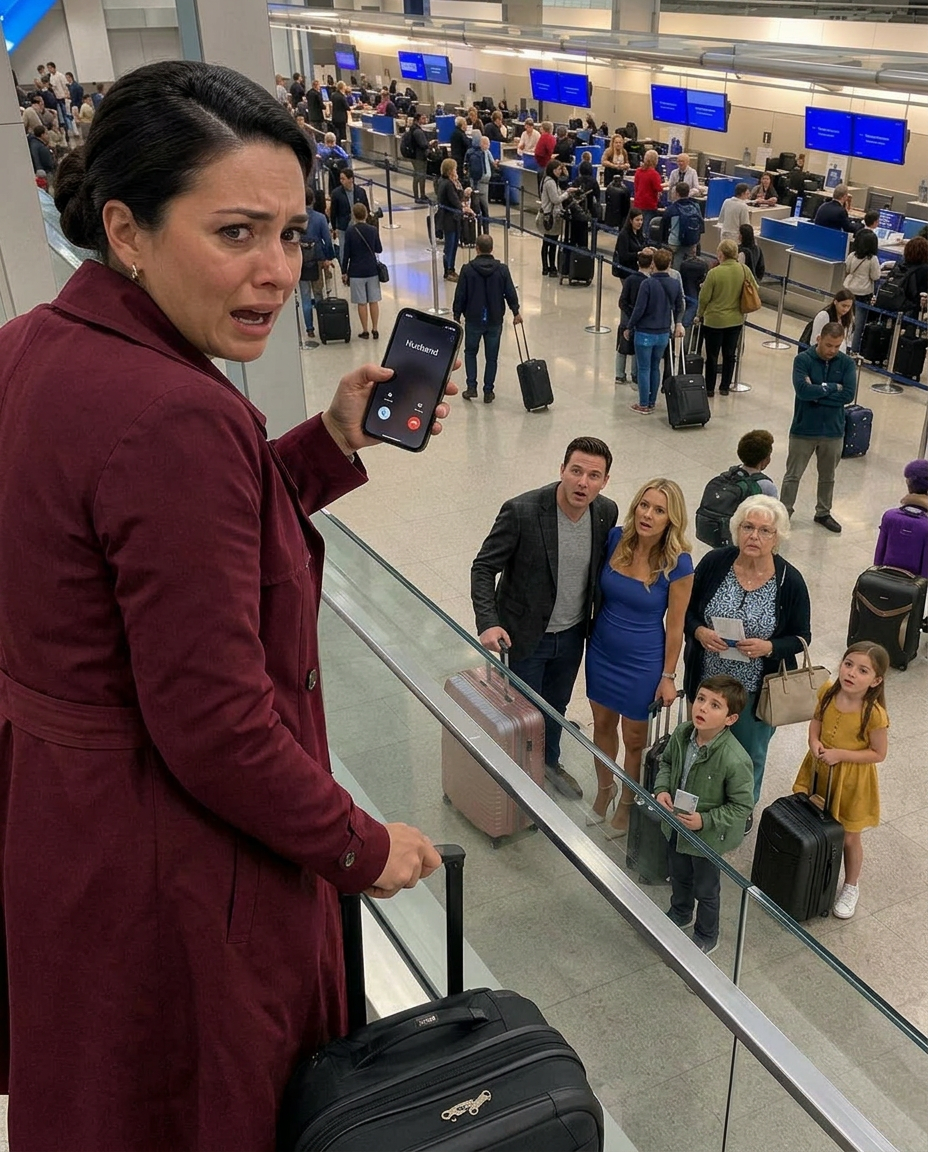
My Husband Said He Was Trapped In Emergency Surgery But The Truth Changed Everything — Part 3

Meanwhile, his daily life unraveled. The internet stopped because the account was in my name. The lawn service ended. The dishwasher leaked. School forms went unsigned. Sophie’s soccer uniform was still damp before picture day.
Nathan called constantly.
What is the electric bill login? Who handles the gutters? Where are the furnace filters?
If it involved the children’s safety, I answered once. If it involved his comfort, I did not. That was not cruelty. That was education.
Diane came to help and lasted thirteen days. When she left, she reportedly told Brooke, “She was doing everything. I had no idea.”
Brooke said I had always liked control.
For once, Diane answered honestly. “No. She was the only competent person in this family, and we treated her like help.”
Some truths arrive too late to become apologies.
Amber left Nathan four months after the airport. She had fallen in love with the version of him I had built: the successful surgeon with the beautiful house, clean shirts, organized calendar, and easy confidence. Once I stepped out of the machinery, she met the real man.
I moved into a brownstone near the arts district with tall windows, old floors, a private garden for Rosie, and a rooftop terrace where the river caught the evening light. I bought it through the trust. No mortgage. No shared name.
The first night, Sophie and Oliver slept in my bed, Rosie on the rug below. I lay awake listening to them breathe, and for the first time in years, the house felt honest.
Not easy. Honest.
The divorce hurt because anything involving children hurts. Sophie asked whether Daddy loved the airport lady more than us. Oliver asked if Grandma Diane was mad at me. I answered carefully.
“Daddy and I both love you. The grown-up problems are not your fault. You will always have a home with me.”
That became our sentence.
Later, I joined the board of the Whitfield Foundation, focusing on education access, medical debt relief, and housing for women rebuilding after financial and emotional abuse. People assumed I had been trained for boardrooms. The truth was ten years of running Nathan’s life had trained me better.
One Sunday evening, Nathan called.
“I know about the trust,” he said.
“I assumed you would eventually learn how to use Google.”
“Why didn’t you tell me?”
Part 3
There it was. Not regret. Not apology. A complaint.
“You had ten years to ask who I was,” I said. “You asked what was for dinner, where your tie was, and whether I remembered your license renewal. You never asked about my family, my finances, my history, my fears, my work, or how our life kept functioning.”
Then he mentioned the failed development deal. The holding company would not return his calls.
“The holding company is mine,” I said.
Silence.
“You spent two years trying to buy property from your own wife and never knew because you never asked a meaningful question about me.”
He said, “I did love you.”
“No,” I answered. “You loved the life I made.”
Then I ended the call.
The divorce was finalized before Christmas. The old house sold in January. Nathan moved into a lonely townhouse near the hospital.
A year after the airport, the Whitfield Surgical Center opened officially. Nathan approached me near the donor wall.
“You did a good thing here,” he said.
“The foundation did,” I replied.
“I’m sorry, Cassandra.”
It was not enough. But it was shaped correctly.
That December, I sat on my rooftop terrace wrapped in a blue cashmere blanket I had bought for myself without hiding the receipt or apologizing. Rosie slept beside me. Inside, Sophie and Oliver were safe under a roof I owned in my own name.
I opened the folder of evidence on my phone: travel records, receipts, statements, hotel bookings—the architecture of betrayal. For months, those files had steadied me.
Now they felt finished.
I deleted them.
In their place were photos of real life: Sophie on a swing, Oliver with paint on his cheek, Rosie in sunlight, my family laughing, the brass Whitfield letters glowing at the hospital.
A life. Not evidence. A life.
For years, I thought hiding my wealth would protect me from being used. But hiding only made it easier for the wrong people to use what they could see: my time, my labor, my silence, my patience.
Money did not save me. Money was only a tool.
What saved me was the moment I stopped mistaking endurance for love.
Some women leave loudly. Some leave quietly.
I left precisely.
I took back my name, my work, my money, my home, my peace, and every part of myself I had folded small enough to fit inside a marriage that never deserved me.
For the first time in ten years, I no longer wondered who Nathan thought I was.
I knew who I was.
And that was enough.