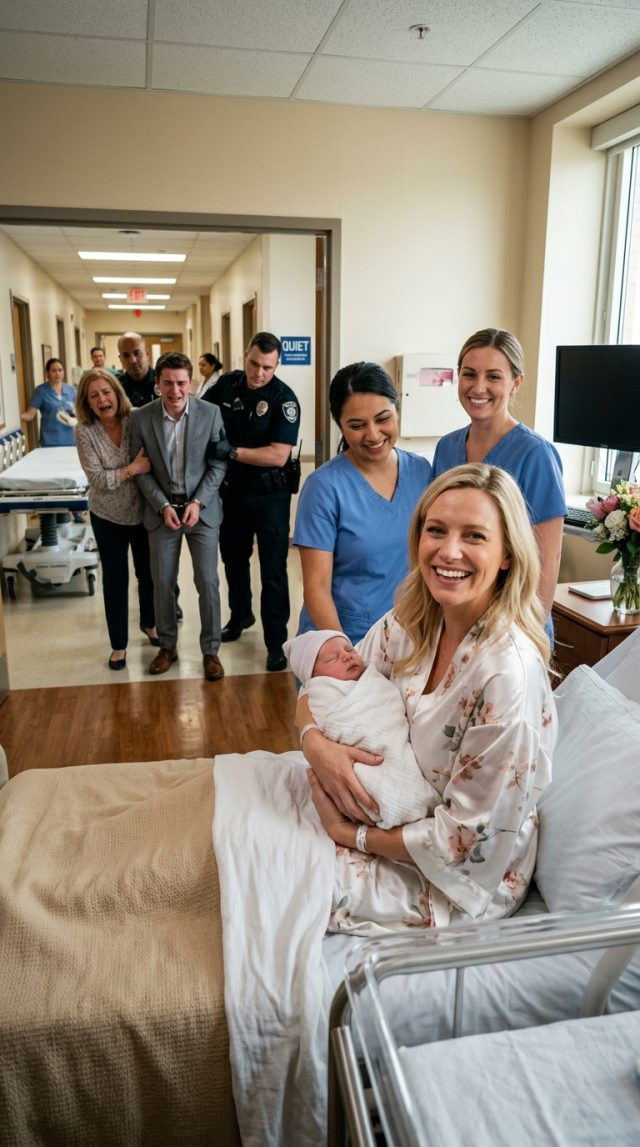
The reality hit them with the crushing, undeniable force of a collapsing building. They hadn’t just lost Samuel’s share; they had lost everything. The empire was gone.
Vivian’s facade shattered entirely. She dropped her designer handbag onto the wooden planks of the porch. Driven by blind, narcissistic panic, she turned her wrath not toward me, but toward the son who had just cost her her fortune. She raised her hand and slapped Derek across the face with a sickening crack.
“You stupid, careless idiot!” Vivian screamed, her voice feral, turning on her own flesh and blood the very second her money was threatened. “I told you to take care of this! You ruined us! You ruined the family image!”
Derek, his cheek glowing red, screamed back, shoving his mother away. “You told me to abandon him! You told me it would ruin my bachelor profile!”
They were devouring each other alive right on my front porch. The “perfect” family was reduced to a pair of shrieking, impoverished animals fighting over the scraps of their own destroyed legacy.
I looked down at the sleeping Elias in my arms. He hadn’t even stirred. He was safe.
I took a step back, my hand grasping the edge of the heavy mahogany door. I looked at Vivian and Derek one last time, absorbing the absolute, magnificent totality of their ruin.
“Call a taxi, Vivian,” I whispered.
I swung the door shut, cutting off their screams, and the heavy steel deadbolt clicked into place with a sound of absolute, irrevocable finality.
Chapter 5: The Ledger Balanced
Six months later, the contrast between the worlds of the guilty and the innocent was staggering.
The plunge of the Hale family had been swift, brutal, and entirely public.
When the high-society circles of the city learned of the abandoned child and the invocation of the Morality Clause, Vivian and Derek were instantly, ruthlessly ostracized. The very people who had stood at the cemetery and looked away from my pain now looked away from Vivian when she walked into a room.
With her assets frozen and heavily penalized by the trust audit, Vivian was forced to sell her beloved South Sea pearls, her designer bags, and eventually, the massive family estate. The foreclosure was executed by the very holding company I now controlled. The grand matriarch of the Hale family was currently living in a cramped, two-bedroom apartment on the loud side of the city, completely shunned by the country club friends she had spent her life trying to impress.
Derek’s fate was a different kind of hell. Stripped of his trust fund and his corporate titles, his lack of actual skills was glaringly exposed.
He was currently working as a mid-level insurance salesman. Worse, Mr. Sterling had initiated a massive back-child-support lawsuit on behalf of Leo’s mother. Half of Derek’s meager wages were legally garnished before he ever saw a paycheck, forcibly paying for the child he had tried to throw away like garbage.
Across the city, a different kind of reality was unfolding.
Sunlight poured through the floor-to-ceiling windows of the executive suite on the top floor of Hale Industries. The air in the room was clean, sharp, and smelling of fresh espresso and blooming orchids.
I sat behind Samuel’s massive glass desk, no longer a grieving, terrified widow, but the undisputed, unassailable Chief Executive Officer of the empire. I wore a tailored navy suit, my hair pulled back in a sharp, elegant twist. I held a silver pen, signing my name to a multi-million-dollar logistics acquisition with a steady, commanding hand.
A few feet away from my desk, resting in a patch of warm sunlight, was a customized, state-of-the-art crib. Inside, six-month-old Elias was sleeping peacefully, clutching a small, plush lion.
I had physically and emotionally reclaimed my life. I was running Samuel’s company with a fierce, intuitive competence that had doubled our quarterly profits. Furthermore, I had established a permanent, untouchable educational trust for little Leo, ensuring that Samuel’s secret act of kindness was honored, and that Derek’s innocent son would never want for anything.
The trauma of Elias’s birth, the suffocating isolation of the cemetery, had been entirely replaced by the fierce, unshakeable reality of a mother who had conquered an empire to protect her child. The grief of losing Samuel still lingered in the quiet moments of the night, a soft ache that I knew would never truly leave me. But the fear of his family, the anxiety of their judgment, was entirely eradicated. I was the storm now.
As I closed the acquisition folder, the intercom on my desk buzzed.
“Ms. Hale,” my executive assistant’s voice filtered through the speaker. “I apologize for the interruption, but Vivian Hale has just entered the lobby. She is… highly emotional. She is weeping and begging for a five-minute meeting with you. She claims she needs a ‘family loan’ to pay her heating bill.”
I looked out the massive glass windows at the city skyline. I remembered the rain. I remembered the feeling of my water breaking, the agonizing pain, and the flat, cold look in Vivian’s eyes when she told me I was an inconvenience.
“Tell security to escort her off the premises,” I replied, my voice perfectly calm, entirely devoid of malice or pity. “And inform the front desk that if she enters the building again, she is to be arrested for trespassing. She is not family.”
“Understood, Ms. Hale. Right away.”
I released the intercom button, stood up, and walked over to my son’s crib. I reached down, gently stroking Elias’s soft cheek. He smiled in his sleep. I had not only survived the rain; I had harnessed the storm, and I had used it to wash the monsters away.
Chapter 6: The Ruler of the Thunder
Three years later.
The city was wrapped in a gentle, rhythmic autumn rain. The sky was a soft, pearlescent grey, and the streets slicked with water reflected the glowing taillights of the evening traffic.
I walked out of the towering glass lobby of Hale Industries corporate headquarters, holding the hand of my three-year-old son, Elias. He was wearing bright yellow rain boots and a matching raincoat, laughing with pure, unadulterated joy as he intentionally stomped into a shallow puddle on the sidewalk. He was strong, vibrant, and fiercely loved.
A sleek, black town car pulled up to the curb, the driver stepping out immediately to open the rear door and raise a large umbrella to shield us.
“Mommy, look! A big splash!” Elias cheered, pointing at the water rippling around his boots.
“I see it, my brave boy,” I smiled, crouching down to adjust his collar, completely unbothered by the rain misting against my tailored wool coat.
As I stood up to guide him into the car, a movement across the wide avenue caught my eye.
Standing under the rusted metal awning of a city bus stop was Vivian.
I almost didn’t recognize her. The grand, terrifying matriarch who had once ruled high society with an iron fist was gone. She was wearing a faded, off-the-rack beige coat that offered little protection from the damp cold. Her signature pearls were gone. Her posture, once so rigid and imperious, was hunched, defeated by the crushing weight of poverty and total isolation. She looked infinitely older, a broken ghost of a woman waiting for public transit in the rain.
For a fraction of a second, the flow of traffic paused, and her eyes met mine through the mist.
Vivian froze. She saw me. She saw the tailored clothes, the luxury car, and the beautiful, thriving grandson she had thrown away. I saw a flicker of desperate recognition in her eyes. She took a hesitant, trembling step forward toward the edge of the curb, raising a frail hand in the air, as if she might call out my name across the avenue.
I stood perfectly still.
I waited for a spike of anger. I waited for a surge of vindictive triumph, or perhaps, the soft, betraying drop of pity that society tells women we are supposed to feel for our abusers when they fall.
But I felt absolutely nothing.
I felt the vast, untouchable, magnificent peace of total indifference. Vivian Hale was not a monster anymore. She wasn’t a cautionary tale. She was simply a stranger waiting for a bus in the rain.
I didn’t wave back. I didn’t glare. I simply broke eye contact, turning my attention entirely back to the only thing in the world that mattered.
I opened my own umbrella, shielding Elias from the rain, and stepped into the warm, leather-scented interior of the town car. The driver shut the heavy door behind us, cutting off the noise of the city, and the car pulled smoothly away from the curb. I didn’t look out the rear window to see if she was still standing there. She was entirely irrelevant.
As the car navigated the slick streets, heading toward the warmth and safety of our home, Elias climbed onto my lap. He giggled, placing his small hand against the thick glass of the window as a heavy raindrop raced down the outside of the pane.
“Rain, Mommy,” he whispered, fascinated by the storm.
“Yes, baby,” I said softly, resting my chin on top of his dark hair, holding him close. “Just rain.”
I looked out at the blurred lights of the city. Three years ago, Vivian had looked at a terrified, bleeding widow in a cemetery and told her to call a taxi. She had done it because she thought I was weak. She thought that because I was alone, I would break.
She never understood the most dangerous, ancient truth of survival. The woman who is forced to walk alone through the storm is the only one who eventually learns how to rule the thunder.
✅ End of story — Part 3 of 3
← Read from Part 1