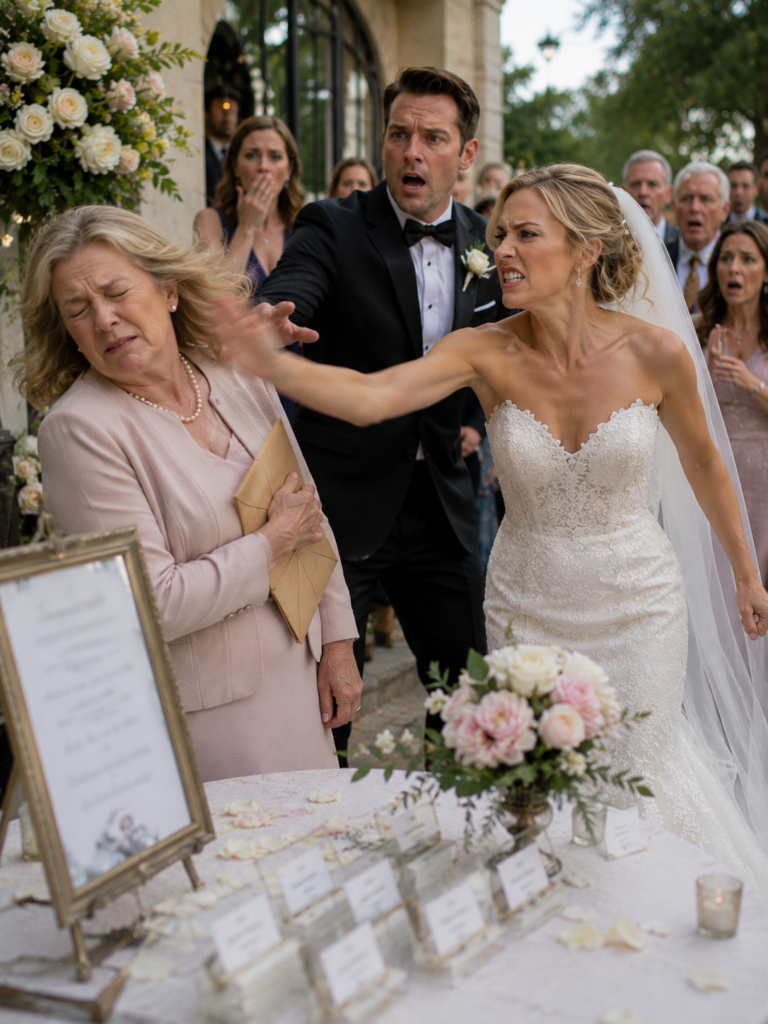
By the time Daniel entered my senior English class, he was working nights at a warehouse, helping care for Ava, trying to finish school, and sleeping through first period because his body had limits his pride refused to acknowledge. The first time I found him with his head down on his desk, I did not send him to the office. I walked to my desk, took out the turkey sandwich I had packed for lunch, placed it beside his elbow, and continued teaching.
When the bell rang, he stayed behind.
“I’m not charity,” he said.
His voice was rough, defensive, ready for insult.
“No,” I replied. “You’re a student who forgot breakfast.”
He stared at me for a long moment.
Then he took the sandwich.
That was the beginning.
The second time, I drove him home in a rainstorm because he was about to walk three miles with a backpack full of wet textbooks. He sat in my passenger seat, arms crossed, staring out the window like accepting help was physically painful. I said nothing. I had learned long ago that teenagers will sometimes tell you more if you give them silence than if you ask them questions.
We pulled up behind a mechanic shop where he and Ava were living in a garage apartment owned by a distant friend of their mother’s. The building smelled of oil and damp concrete. A single light burned above the stairs. Daniel opened the car door, then paused.
“My sister’s inside,” he said.
“I figured.”
“She’s fine.”
“I didn’t say she wasn’t.”
“She’s smart.”
“I’m sure she is.”
He looked at me then, suspicious and exhausted.
“You always talk like that?”
“Like what?”
“Like you already know what people are trying not to say.”
I smiled.
“Forty-one years of teaching, Mr. Mercer. You start hearing the unsaid parts.”
He almost smiled back.
Almost.
Over the next months, I learned the full truth. Daniel was working from six in the evening until after midnight, doing homework in the break room, sleeping four hours, then coming to school. He had ideas about logistics—regional freight, warehouse coordination, small supplier networks, delivery inefficiencies. At seventeen, he could talk about supply chains with more clarity than grown men I had heard speak at business luncheons. He had notebooks full of numbers, routes, cost estimates, and sketches of systems he believed could help small businesses compete with larger distributors.
But he had no safety net.
So I became part of one.
I helped him fill out scholarship forms. I corrected his essays until he learned to write without apologizing for ambition. I called a former student who owned a small warehouse and got Daniel a part-time office job that did not destroy his sleep schedule. I introduced him to my brother, who knew two local investors and had a soft spot for young people with hunger in their eyes. I drove Ava to debate practice when Daniel’s shift ran long. I kept granola bars in my drawer. I showed him how to make a professional phone call. I taught him that a thank-you note could open a door money could not.
When Daniel graduated, he hugged me so hard he nearly cracked a rib.
“Mrs. Brooks,” he whispered, “I don’t know how to pay you back.”
“You live well,” I told him. “That will be enough.”
He did more than live well.
He worked. He studied. He failed. He tried again. He launched his first logistics company after college with more nerve than capital. When the bank laughed him out of the room, he came to see me.
He was twenty-three then, older but still carrying that same hunger.
“I’m not asking you for money,” he said before sitting down in my kitchen.
I set two mugs of tea on the table.
“Good. Then we can talk honestly.”
He looked miserable.
“I have purchase orders. I have two clients ready if I can secure warehouse space. I need the lease deposit and first month of operating cash. I tried the bank. They said I’m too young and undercapitalized.”
“That means broke with syllables,” I said.
He laughed despite himself.
I had only one cash reserve outside retirement. It was not large. It was supposed to be for my roof, my old car, medical surprises, the things single women in modest houses prepare for because nobody else is coming to fix the leak. I did not hand it over lightly. I insisted on paperwork. A private loan agreement. Repayment terms. Interest, though modest. Not charity.
Daniel resisted.
“I don’t want to take from you.”
“You’re not taking,” I said. “You’re borrowing. There is a difference, and I expect you to respect it.”
He did.
Every dollar came back.
With interest.
But the real gift was not the money.
It was trust.
A young man with no family safety net needs more than a check. He needs one person to say, “I see you. Don’t quit.”
Daniel built the rest himself. No one can take that from him. He worked until his hands shook. He negotiated better than men twice his age. He remembered warehouse workers by name. He paid small vendors early when he could because he knew what waiting for money did to people. He grew the company carefully, then boldly, then beyond what any of us imagined.
But yes—his first serious funding, his first investor introduction, and several relationships that later changed his life came through doors I opened.
Not because I was rich.
Because people trusted me.
For decades, parents, former students, business owners, principals, pastors, mechanics, nurses, and city clerks had known one thing: if Eleanor Brooks vouched for someone, she meant it.
Vanessa knew none of that.
She only saw an elderly woman in modest clothes and decided I was disposable.
Then Daniel’s voice cut across the entrance hall.
“Mrs. Brooks?”
I turned.
He was halfway down the corridor, still in his tuxedo, one cuff undone, his expression shifting from confusion to horror in less than two seconds. He saw my face. He saw my glasses crooked. He saw the gift bag on the floor. He saw Vanessa standing too close. He saw the silence.
Smart people can read a room very fast.
Daniel rushed forward.
“What happened?”
Vanessa changed instantly.
That is how people like her survive. They pivot. They edit. They perform innocence before the truth finishes landing.
“Oh, babe,” she said, reaching toward him, “this woman was creating a scene. I don’t even know how she got in here.”
Daniel did not look at her.
He was staring at me.
“Mrs. Brooks,” he said again, softer this time, “did she touch you?”
There are moments in life when the truth itself becomes a weapon.
I could have softened it. I could have protected the day. I could have lied. Women like me are trained in rescue even when we are the wounded ones. I could have said, “It was nothing.” I could have said, “Let’s not ruin the wedding.” I could have absorbed one more humiliation because older women are often expected to make themselves into cushions for other people’s bad behavior.
Instead, I said, “Yes.”
Vanessa laughed nervously.
“It was nothing. She was being dramatic.”
Daniel slowly turned toward her.
I watched the color drain from his face.
“Nothing?” he repeated.
Then he asked the question that told me he already knew the answer.
“In front of everyone?”
Nobody moved.
Nobody breathed.
The bridesmaids who had giggled earlier suddenly became fascinated by the marble floor. A man near the champagne tower cleared his throat and then seemed to regret making noise at all. The wedding planner’s headset crackled softly.
Vanessa reached for Daniel’s arm.
“Daniel, you’re overreacting.”
He stepped back like her hand burned.
Then he did something I did not expect.
He walked past her, came straight to me, and dropped to his knees on the marble floor.
In his tuxedo.
In front of both families.
In front of the wedding planner.
In front of the photographers.
In front of a hundred stunned guests.
And he said, voice breaking, “Mrs. Brooks, I am so sorry.”
There is a kind of silence that feels holy.
This was that.
He took my hand with both of his and looked up at me with tears in his eyes.
“You should never have been treated like this. Not here. Not anywhere. Not by anyone in my life.”
For one moment, the entrance hall disappeared. I saw the boy he had been, sitting in my classroom with grief under his skin and pride in his jaw. I saw his mother’s funeral, the cheap folding chairs in the church basement, Ava standing beside him with red eyes and clenched fists. I saw a sandwich on a desk. A scholarship form. A young man signing a private loan agreement at my kitchen table because he refused charity but accepted trust.
Vanessa’s mother gasped.
Her father muttered, “What is going on?”
Daniel stood.
Now everyone got the answer.
“This woman,” he said, pointing to me, “is the reason I graduated. She is the reason I met my first investors. She is the reason I had startup capital when nobody else believed in me. She helped build the life you are all here celebrating.”
A murmur moved through the crowd like wind through leaves.
Vanessa blinked.
Then she smiled that brittle smile again.
“Oh my God, Daniel. Fine. I didn’t know she was important.”
That word.
Important.
Not innocent.
Not elderly.
Not kind.
Not human.
Important.
As if basic decency required a résumé.
Daniel heard it too.
His jaw tightened.
“She didn’t need to be important,” he said. “She needed to be treated like a human being.”
That should have been the end.
It was not.
Because entitled people rarely fall from a single lie. They collapse under the full weight of everything they thought would stay hidden.
Ava stepped forward from near the staircase. Daniel’s younger sister was twenty-eight then, sharp-eyed and elegant in a dark green dress, but when I looked at her, I still saw the fourteen-year-old girl doing homework at my kitchen table while Daniel worked late. She held up her phone.
“I got the whole thing,” she said.
Vanessa turned white.
Ava had recorded more than the slap. She had recorded the comments before it. The insults. The sneering. The line about my whole life costing less than the wedding.
Then the wedding planner spoke up too.
“We also have venue security footage in the entrance corridor.”
Now Vanessa’s father was staring at her like a stranger.
“What did you say to this woman?” he asked.
Vanessa snapped, “Oh, please. Everybody is acting insane over some old lady—”
Daniel raised his hand.
“Don’t.”
That one word landed like a door slamming shut.
I have seen children realize a game is over.
This was the adult version.
Vanessa tried tears next.
Instantly.
Expertly.
“Daniel, today is stressful. I didn’t mean it like that.”
But Daniel had finally stopped looking at the bride he thought he loved.
He was looking at the truth.
And the truth was not just the slap.
It was a pattern.
A week earlier, he had called me late in the evening. His voice had been tight, though he tried to make it sound like amusement.
“Vanessa wants to clean up the guest list,” he said.
“Clean up?”
“She thinks some people don’t really fit the tone of the event.”
I had been sitting at my kitchen table, reading glasses low on my nose, a stack of volunteer scholarship essays beside my tea.
“What tone is that?”
He laughed lightly. Too lightly. “You know how weddings are.”
I did know.
I knew weddings revealed people.
Daniel told me Vanessa did not want his old neighborhood friends near the front. She did not want certain relatives in photos. She thought his high school coach was “sweet but visually distracting.” She suggested his warehouse mentor might be more comfortable at the back “with the business associates.” She wanted Daniel’s history trimmed, polished, and rearranged until it suited the image she had built around the man he had become.
“She thinks my past looks cheap,” he said, still trying to laugh.
I let the silence sit.
“Daniel,” I said finally, “people who are ashamed of your roots will eventually become ashamed of you when life gets dirty.”