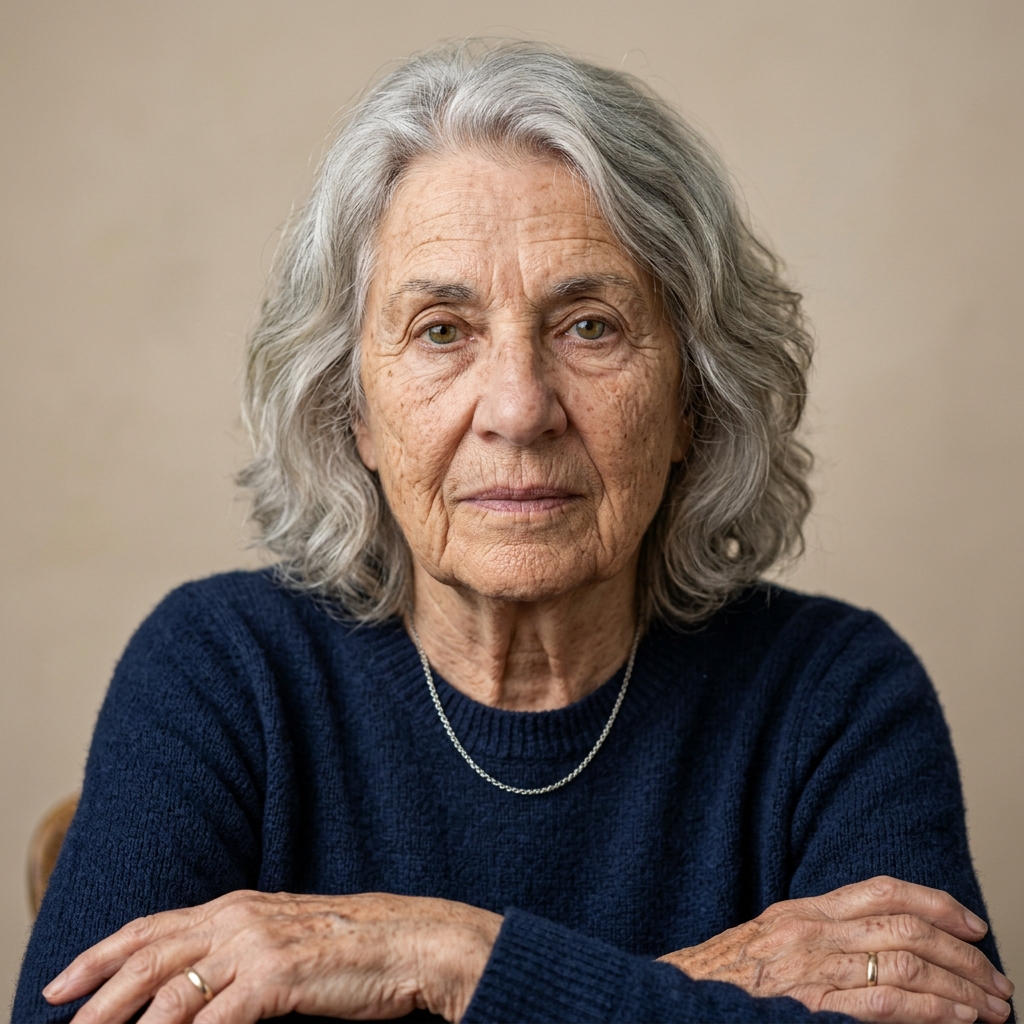
In April of my final year of medical school, I received a phone call from the Dean’s office. I had been selected as the valedictorian for the Johns Hopkins School of Medicine Class of 2026. I had the highest academic standing, flawless clinical evaluations, and I was tasked with delivering the commencement address.
I called Rachel. She screamed so loudly the neighbor’s dog started barking. She wept, and I wept with her. We had done it. We had climbed the mountain.
Two weeks before the graduation ceremony, I sat in my apartment, staring at my laptop screen. The university’s events coordinator had sent an email. Because I was valedictorian, I was granted a premium VIP seating section. I had submitted my list: Rachel, and the tight-knit group of nurses and friends who had become my aunts and uncles over the years.
But the coordinator’s email contained a paragraph that made the blood freeze in my veins.
Dear Dr. Torres, we have received an additional request for your reserved VIP section. A couple named Linda and Robert Mitchell have contacted the university, claiming to be your parents, and have requested access to the premium seating area. Should we add them to your list?
I stared at the screen, my heart pounding a frantic rhythm against my ribs. Linda and Robert Mitchell. The people who threw me away like garbage because I was a financial inconvenience. Now that I was about to become Dr. Sarah Torres, valedictorian of one of the most prestigious medical schools on earth, they wanted front-row seats to claim the glory.
I picked up my phone with trembling hands and dialed Rachel. “Mom. They want to come.”
Rachel was silent for a long moment. “How do you feel about that?”
“I want to burn their house down,” I admitted, my voice shaking. “But… another part of me wants them to see exactly what they threw away.”
“It’s your day, Sarah,” Rachel said softly, her voice infused with a dangerous pride. “If you ask me? Let them come. Let them sit in the front row. Let them watch the woman you became with a real mother standing beside you.”
I hung up the phone. I opened the email reply window. I didn’t just add them to the list. I began to rewrite my valedictorian speech. I was going to give them a front-row seat to their own execution.
May 20th, 2026. The day of the Johns Hopkins commencement.
The ceremony was held at the massive Royal Farms Arena in Baltimore. Ten thousand people packed the stadium—graduates, faculty, and families buzzing with electric excitement. I stood in the holding area, the heavy, prestigious fabric of my academic robes draped over my shoulders. Beneath the robe, I wore the silver necklace with Rachel’s and my initials.
The graduation march echoed through the massive speakers. As our class of one hundred and twenty medical students filed into the arena, the flash of cameras was blinding.
I kept my eyes scanning the VIP section, Section A, Row 3.
There she was. Rachel. She was wearing a beautiful emerald green dress, clutching a bouquet of yellow roses, her face already slick with tears of joy. Beside her sat her closest friends, my chosen family.
And two seats down, sitting uncomfortably in the velvet-cushioned chairs, were Linda and Robert.
I hadn’t seen them in fifteen years. The years had not been kind. My father had lost most of his hair, and his face was lined with a bitter, permanent scowl. My mother looked frail, her posture hunched, her eyes darting nervously around the opulent arena. They were scanning the sea of graduates, likely trying to spot me. They hadn’t realized that the reserved seats they were sitting in were exclusively for the valedictorian’s family.
The ceremony dragged through the necessary formalities. Dean Morrison gave his welcome. The keynote speaker droned on about the future of medicine. My pulse roared in my ears, drowning out the noise.
“And now,” Dean Morrison announced, his voice booming through the arena, “it is my tremendous honor to introduce our valedictorian. She graduated at the absolute top of her class, conducting groundbreaking research in pediatric oncology. Ladies and gentlemen, Dr. Sarah Torres.”
The stadium erupted in thunderous applause. I stood up, my legs feeling like lead, and walked up the steps to the towering stage. As I approached the podium, I looked down at Section A.
My biological parents had frozen entirely. My mother’s hand was clamped over her mouth. My father had gone the color of spoiled milk. They were staring at their printed programs, connecting the dots. Mitchell wasn’t on the stage. Torres was.
I adjusted the microphone. The arena fell into a hushed, expectant silence. Ten thousand pairs of eyes were locked on me.
“Thank you, Dean Morrison,” I began, my voice ringing out clear and steady. “To our distinguished guests, faculty, and my fellow graduates: Congratulations.”
A polite cheer rippled through the crowd. I gripped the edges of the podium until my knuckles turned white.
“When I was thirteen years old, I was diagnosed with acute lymphoblastic leukemia. I remember sitting in a sterile hospital room, terrified, wondering if I was going to die. But more terrifying than the cancer was the moment I realized I would have to fight it completely alone.”
The silence in the arena became absolute. You could have heard a pin drop.
“My biological parents made a choice that day,” I said, my voice echoing like thunder. “They calculated the cost of my medical treatment, looked at their bank accounts, and decided my life was a bad investment. They told me that my sister’s college fund was more important than my survival. They legally abandoned me in that hospital room. I was thirteen, bald, sick, and discarded.”
A collective gasp echoed from the audience. I looked directly down at Section A. My mother was shaking violently, tears streaming down her face, her hands covering her eyes. My father was staring at his lap, physically shrinking into his chair as the people around them began to stare, whispering frantically.
“But I was not alone for long,” I continued, the anger in my voice shifting into a profound, overwhelming warmth. “Because a pediatric oncology nurse named Rachel Torres saw a discarded child and decided to be a mother.”
I looked at Rachel. She was openly weeping, a hand pressed hard against her heart.
“Rachel took me in. She held my hand while the poison pumped into my veins. She worked double, sometimes triple shifts to ensure I never lacked for anything. When my biological parents told me I was ‘average’ and not worth saving, Rachel told me I could conquer the world. She adopted me. She saved my life.”
I took off my graduation cap, placing it on the podium.
“This degree does not belong to me,” I declared. “This degree belongs to Rachel Torres. She taught me that family is not about blood. Family is about who is holding your hand when the monitor flatlines. She is the reason I am standing here today.”
I turned my gaze back to the two shrinking figures in the front row.
“To my biological parents, who requested VIP tickets to be here today,” I said, my voice dripping with absolute, glacial finality. “Thank you. Thank you for abandoning me. If you hadn’t thrown me away, I never would have found my real mother. You gave up a daughter to save a bank account. I hope it was worth it.”
The tension in the arena was so thick it was suffocating.
“And to Mom,” I smiled, looking at Rachel, who was now standing on her feet, sobbing. “I love you. This is for you.”
The stadium exploded. It wasn’t just applause; it was a roaring, standing ovation. My classmates leapt to their feet. But as the deafening cheers washed over the stage, I saw my father grab my mother’s arm. Their faces were red with supreme humiliation, surrounded by disgusted glares from the Hopkins elite. They stood up to flee, but as they turned toward the aisle, an event security guard stepped firmly into their path.
The reception hall adjacent to the arena was a chaotic blur of champagne, camera flashes, and tearful hugs. I was swarmed by classmates and professors, many with tears in their eyes, congratulating me on the speech. But I only cared about finding one person.
I pushed through the crowd until I collided with Rachel. We held each other tightly, crying openly in the middle of the opulent room.
“You didn’t have to do that,” she sobbed into my shoulder. “You didn’t have to give me the credit.”
“I absolutely did,” I replied fiercely. “It’s the truth.”
Through the sea of bodies, I caught one final glimpse of Linda and Robert. The security guard had simply been directing traffic, but they looked like trapped animals. They were standing by the exit doors, entirely isolated. No one approached them. The people who recognized them from their VIP seats cast them looks of pure, unfiltered disgust. They lingered for twenty minutes, hoping I would approach them. When I turned my back, they finally slipped out the doors and vanished into the Baltimore heat.
But the story didn’t end there. The universe has a profound sense of irony, and over the next two weeks, the truth of their desperation came to light.
It started with a barrage of voicemails and frantic emails. I learned the whole pathetic story from a combination of their messages and a mutual acquaintance who still lived in our old hometown.
After they abandoned me, my parents had indeed poured every cent they had into Jessica. She went to Yale. She went to law school. She married a high-powered, wealthy investment banker. My parents lived lavishly, relying entirely on Jessica’s financial support, having drained their own retirement accounts to fund her elite lifestyle.
But six months before my graduation, the house of cards collapsed. Jessica’s husband was indicted in a massive, multi-million-dollar insider trading scheme. He was sentenced to federal prison. Jessica lost her prestigious corporate law job in the ensuing public scandal. Their assets were frozen, their mansion seized by the government.
Jessica was broke, disgraced, and fighting to stay out of jail herself. She completely cut off my parents.
Linda and Robert were facing imminent foreclosure on their home. They were drowning. And then, miraculously, they saw the press release that the daughter they threw away was graduating as valedictorian of Johns Hopkins Medical School. They saw dollar signs. They requested the VIP tickets hoping for a tearful, public reconciliation, hoping the “rich doctor daughter” would swoop in and save them from ruin.
Instead, I had publicly crucified them in front of the medical elite.
The voicemails were pathetic.
“Sarah, it’s Mom. I know what you must think of us. We made a terrible mistake. But you’re doing so well now, and we’re facing foreclosure. Jessica can’t help us. Please, you’re a doctor now. You take an oath to help people. Call me back.”
Delete.
Two days later, an email from my father.
“Sarah, you humiliated us. We made the best financial decision we could at the time. You turned out fine, so clearly we didn’t ruin your life. We are your blood. You owe us at least a conversation, and some financial assistance. Call us.”
After the forty-seventh attempted contact, I finally sent one, single email in response.
“When I was thirteen, you told me I was a bad investment. You told me I was average. You threw me away so you wouldn’t lose your money. Rachel Torres invested her life into me. She is my mother. My money, my success, and my family belong to her. I owe you absolutely nothing. Enjoy your return on investment. Do not ever contact me again.”
I blocked their numbers, blocked their emails, and never looked back.
That was three years ago. I am thirty-one now. I am officially Dr. Sarah Torres, completing my elite fellowship in pediatric oncology at the Children’s Hospital of Philadelphia. I spend my days walking into hospital rooms, looking terrified children in the eye, and promising them they aren’t fighting alone.
Rachel is still in Baltimore, working part-time now. I bought her a new car last year. We talk every single day. She is my mother, my anchor, and my absolute hero.
I heard recently that Linda and Robert lost their house. They are currently living in a cramped, one-bedroom apartment on the bad side of town, surviving entirely on meager social security checks. Jessica doesn’t speak to them. They have nothing, and no one.
I feel absolutely nothing when I think of them. No guilt, no sorrow, no triumph. They are strangers who made a calculated business decision fifteen years ago, and I simply finalized the transaction on that stage.
If you are reading this, and you have ever been abandoned, rejected, or told by the people who were supposed to love you that you are not enough—listen to me. They are wrong. Your worth is not determined by those blind to it. Family is not defined by blood; it is defined by who stands in the fire with you.
Find your Rachel. Build your empire. And then, let your success be the loudest, most deafening response to every person who ever doubted you.
If you want more stories like this, or if you’d like to share your thoughts about what you would have done in my situation, I’d love to hear from you. Your perspective helps these stories reach more people, so don’t be shy about commenting or sharing.
✅ End of story — Part 3 of 3
← Read from Part 1