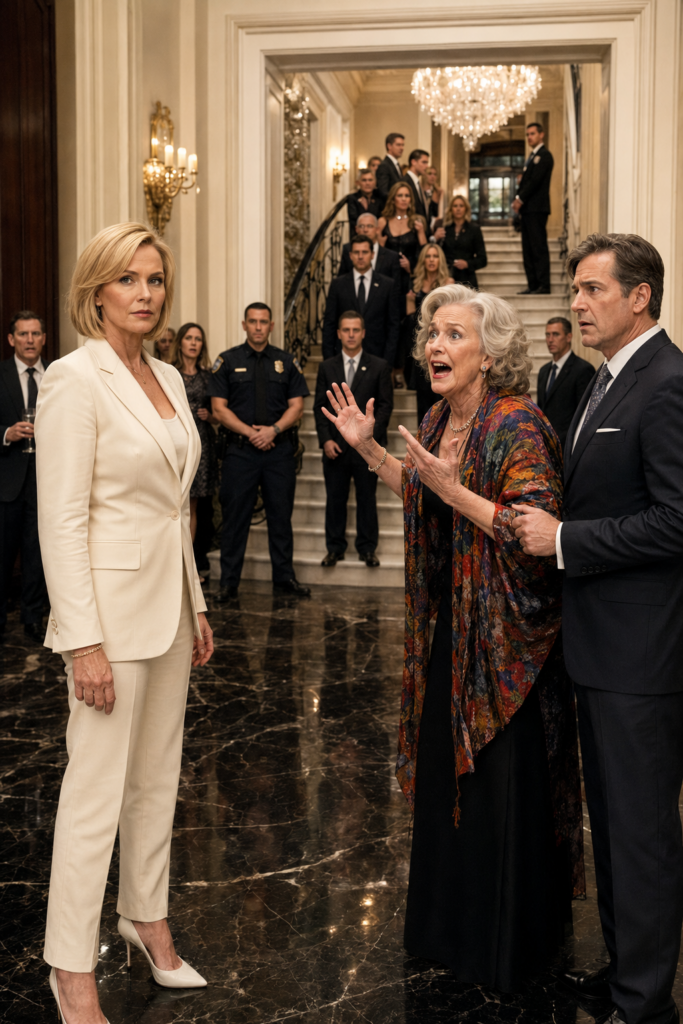
First came the guilt. Messages from relatives I barely spoke to, talking about unity and forgiveness, as if I’d done something unforgivable by refusing to be insulted.
Then came the bargaining. Rebecca called and offered to “include me” if I apologized to Patricia. Derek sent a message that said, You made a scene. Fix it. You know how Mom gets.
Then came the gaslighting. Aunt Patricia claimed she had “never said I wasn’t invited,” despite the group chat receipts. Derek said it was “obvious” she had been joking. Melissa said I was “too sensitive.”
Finally, when none of that worked, came the anger.
Patricia sent a voicemail so long it cut off and started again. I didn’t listen to it all, but the first thirty seconds were enough: she called me selfish, bitter, childish, vindictive.
The irony almost made me laugh out loud. Vindictive, because I enforced a clause she signed. Bitter, because I refused to be treated like dirt.
Family can be astonishingly creative when they’re trying to avoid accountability.
One evening, two weeks after the cancellation, I got an email forwarded from Riverside’s booking system. The subject line was unmissable:
RECONSIDER
No greeting. No apology. Just a block of text.
This family feud is getting ridiculous. I don’t know who you think you are, but you’re tearing this family apart. We need Riverside for Christmas. You will reinstate the reservation immediately and return the deposit. We will discuss your behavior at a later time.
It was written like an order.
I stared at the screen and felt my lips twitch.
Then I deleted it.
I didn’t respond because responding would imply there was a negotiation. There wasn’t.
There was simply reality.
And reality was: the person with the deed decides who enters the property.
On December 1st, the date the balance would’ve been due, James called me.
“They’re trying to call us,” he said. “Patricia, Derek, your mother—everyone. They’ve called the main line eight times today.”
“Have they submitted a written request?” I asked.
“No.”
“Then ignore them,” I said.
He chuckled softly. “Done.”
That week, I got another screenshot of the family group chat from cousin Anna. She didn’t send it to stir drama. She sent it because she knew it would validate my choice to leave.
In the screenshot, Rebecca was writing: She thinks she’s better than us now. Who does she think she is?
Under it, Derek: She’s always been jealous. This is her way of getting attention.
And then, my grandmother—my ninety-two-year-old grandmother—had replied in the chat with a single sentence:
Stop talking about Sophia like she isn’t family.
No one responded to her. But seeing it made something warm settle inside my chest, small but steady.
That night, I called my grandmother.
She answered on the third ring, her voice strong despite her age. “Mija.”
“Hi, Aba,” I said, using the nickname I’d called her since I was little.
“I heard there was drama,” she said.
“Of course you did.”
She made a thoughtful sound. “Your aunt is foolish.”
I laughed softly. “That’s one way to put it.”
“Patricia has always thought she could decide who matters,” my grandmother continued. “She decided that when she married into money, she became the judge of everyone else.”
There was a pause, and I could hear the faint sound of a TV in the background. My grandmother lived in a small apartment now, surrounded by plants and crocheted blankets and the quiet comfort of a life that had weathered worse storms than group chats.
“I’m proud of you,” she said suddenly.
My throat tightened. “Thank you.”
“I always have been,” she added, like it was obvious. “You work hard. You build things. You take care of yourself.”
The tears came fast, humiliating and hot. I pressed my fingers to my eyes.
“I was thinking,” she said, “maybe I come to your Christmas dinner.”
I froze. “You know about that?”
“Mija,” she said dryly, “I am old, not dead.”
I laughed through the tears. “Yes,” I said. “Yes, you can come.”
“Good,” she replied. “Now I have something to look forward to.”
On Christmas morning, I woke early.
Not because I was anxious, but because I felt… calm. That surprised me. Christmas had always been complicated for me—wrapped up in childhood memories and adult disappointments. But this year felt like something new: mine.
I drove out to Riverside Estates just after sunrise, the air crisp and clean, the sky pale with winter light. The grounds looked perfect, the kind of perfect that required unseen labor: trimmed hedges, swept walkways, lights twinkling along the terrace railing.
As I stepped out of my car, the smell of pine hit me from the giant tree set up in the foyer. The building was warm, filled with soft music and the quiet hustle of staff preparing.
Caroline greeted me at the door. “Merry Christmas, Ms. Martinez.”
“Merry Christmas,” I said, and felt a genuine smile spread across my face.
“You look…” Caroline hesitated, then chose the word carefully. “Peaceful.”
“I feel peaceful,” I admitted.
James walked over a moment later, holding a clipboard, his tie slightly crooked the way it always was when he’d been running around.
“Everything’s set,” he said. “Chef arrived at six. Wine is decanted. Table is staged. Your grandmother’s chair is the comfortable one like you asked.”
“Thank you,” I said.
He glanced at me, then lowered his voice. “For what it’s worth… you did the right thing.”
I met his gaze. “I know.”
That afternoon, my guests arrived one by one.
Maria swept in first, wearing a dress that was both elegant and slightly rebellious, like she’d picked it specifically to remind everyone that class wasn’t about following rules—it was about owning yourself. She hugged me so hard I almost stumbled.
“I cannot believe your family thought they could kick you out of your own venue,” she whispered in my ear. “Iconic.”
Robert arrived next, carrying a bottle of wine older than I was. He wore a suit that looked effortless, and he gave me a quiet, approving nod like a father figure who didn’t need to say much.
Jenny came with her partner, looking nervous in the grandeur of Riverside but bright-eyed with excitement. “I’ve never been to an event space like this,” she admitted. “I mean, I know we manage it, but seeing it like this—”
“You belong here,” I told her. “All of you do.”
Then Uncle Richard arrived—my mother’s brother, the one who had always been quieter at family gatherings, the one who had slipped me a twenty-dollar bill at sixteen and said, “For your dreams,” when no one else took my dreams seriously.
He hugged me and murmured, “I always knew you’d do something big. I’m sorry I didn’t speak up more.”
Cousin Anna came next. She’d stopped attending family events two years ago without much explanation. Now she gave me a smile that held understanding.
“I’m so glad you did this,” she said.
Finally, my grandmother arrived, leaning on her cane, her eyes sharp and bright. She wore a deep red shawl and lipstick that made her look like a queen.
When she saw the tree, the lights, the staff moving smoothly, she lifted her eyebrows. “You did well, mija.”
I kissed her forehead. “I’m so happy you’re here.”
We sat at the table—eight of us, surrounded by soft candlelight and the gentle hush of a room built for celebrations. The table settings were simple but beautiful: white linen, gold cutlery, small sprigs of rosemary on each plate.
When the first course arrived, Maria raised her glass.
“I want to toast,” she said, her eyes glinting. “To Sophia. Not because she owns a venue—though, honestly, that’s hot—but because she stopped letting people tell her who she was.”
Everyone laughed softly, and I felt my cheeks warm.
“To chosen family,” Maria continued, lifting her glass higher. “The people who show up. The people who clap when you win. The people who don’t need you to be smaller so they can feel bigger.”
We clinked glasses.
The wine tasted like warmth.
As the evening unfolded, stories filled the room—real stories, not the polished “holiday update” kind my family traded like business cards.
Robert told the story of the first time I walked into his office years ago, younger and terrified, asking questions about loan structures with the intensity of someone starving for knowledge. “You weren’t afraid of work,” he said. “You were afraid you didn’t belong. I watched you learn to belong anyway.”
Jenny told the story of the day I negotiated a deal from a hospital bed. “I was freaking out,” she admitted, laughing. “And Sophia is sitting there like, ‘Can you hold the phone closer? I need to hear the interest rate.’”
Uncle Richard told a story about my mother as a child, mischievous and stubborn. My grandmother corrected him on details, and everyone laughed.
For the first time in years, I didn’t feel like I was performing at a family gathering. I didn’t feel like I had to defend myself. I didn’t feel like my success made people uncomfortable.
I felt… safe.
During dessert, my grandmother reached across the table and took my hand. Her skin was thin and warm, her grip surprisingly strong.
“You know what’s funny?” she said.
“What?” I asked.
“They thought they were inviting the right people,” she said, nodding toward the grand room around us. “The Hendersons, the Waywrights, all those important names.”
Maria grinned. “The yacht club crowd,” she added.
My grandmother squeezed my fingers. “But the most successful Martinez was already in the family,” she said. “They just never bothered to look.”
My eyes stung again. I blinked hard, laughing softly because crying again would’ve been too much.
Later, when the dinner was finished and the staff cleared plates with practiced elegance, we moved to the terrace where heaters warmed the air. The river beyond was dark and slow, reflecting the lights like scattered coins.
Maria leaned against the railing beside me. “Do you feel guilty?” she asked quietly.
I considered the question honestly. “Not guilty,” I said. “Sad, sometimes. Mostly… relieved.”
Maria nodded. “Good.”
Inside, laughter drifted out as Jenny and Uncle Richard argued over whether Die Hard was a Christmas movie.
I looked at the estate—the grounds, the building, the lights—everything I’d built with my own hands and mind. For years, my family had treated me like a failure because I didn’t fit their idea of success. But standing there, with the river murmuring below and my real family close by, I understood something clearly:
Their opinion had never been about me.
It had been about control.
They wanted me to be the one they could pity, the one they could correct, the one whose life made theirs look better by comparison. My success disrupted that story, so they ignored it. And when they couldn’t ignore it anymore, they tried to claim it as theirs.
They booked my venue. They paid my deposit. They planned their “classy Christmas” on my property while uninviting me like I was a stain on the carpet.
They assumed they still held power.
But power isn’t a family heirloom. It’s not passed down through gossip and group chats. It’s built—brick by brick, deal by deal, boundary by boundary.
Six months after that Christmas, I heard through the grapevine that Aunt Patricia never rebooked her dream holiday. The family gathered at her house instead. Thirty-two people crammed into a space meant for fifteen. I heard it was chaos. I heard someone spilled red wine on her cream couch. I heard Derek got into a shouting match with Melissa’s husband about politics. I heard the Hendersons never came.
I heard Derek’s office lease wasn’t renewed at the below-market rate. The new tenants paid market, four thousand two hundred more per month. I didn’t raise it as punishment; I raised it because market was market. But I didn’t go out of my way to protect Derek from reality anymore.
I heard my mother started asking about me carefully through Uncle Richard—whether I was well, whether I’d consider coming to Easter. She didn’t call me directly at first. Pride is a stubborn thing. But the questions came anyway, like she couldn’t stop herself from wanting to know about the daughter she’d never truly tried to understand.
I heard Rebecca tried to book Riverside Estates for her daughter’s sweet sixteen. The request was denied automatically. Not because I wanted to ruin a teenager’s party, but because Rebecca didn’t include any note about whether I’d be welcome to attend.
Rules are rules.
Eventually, the requests that came through the system changed.
They started including notes:
Would Sophia be welcome to attend?
Some I approved. Uncle Richard’s retirement party. Cousin Anna’s engagement celebration. My grandmother’s ninety-third birthday.
Some I denied. No explanation needed beyond the attendance clause.
And Aunt Patricia? She emailed once a month like clockwork.
Always the same subject line.
RECONSIDER
Always the same message, slightly rearranged:
This family feud is getting ridiculous.
I never responded.
Because there was no feud.
A feud requires two parties fighting. This wasn’t a war. This was a correction. A quiet shift in gravity where the world finally recognized what had been true all along.
They wanted an elegant Christmas at Riverside Estates.
They got a lesson in reading contracts instead.
And I got my family dinner exactly where it belonged: at my table, in my venue, with my people, on my terms.
The bill for that Christmas dinner, if anyone cared about numbers, was four thousand two hundred dollars—paid, technically, to myself.
The look on Aunt Patricia’s face when Caroline escorted her out?
Priceless.
But the real value—the one no spreadsheet could capture—was the moment I understood, fully and without doubt, that I had built something they could not take away.
Not the property.
Not the money.
Not the success.
The self-respect.
And that, more than any venue or deposit or guest list, was the Christmas gift I’d given myself.
THE END
✅ End of story — Part 3 of 3
← Read from Part 1